Showing posts with label Gyna capucina. Show all posts

Tuesday, May 9, 2023

Random Bug Updates

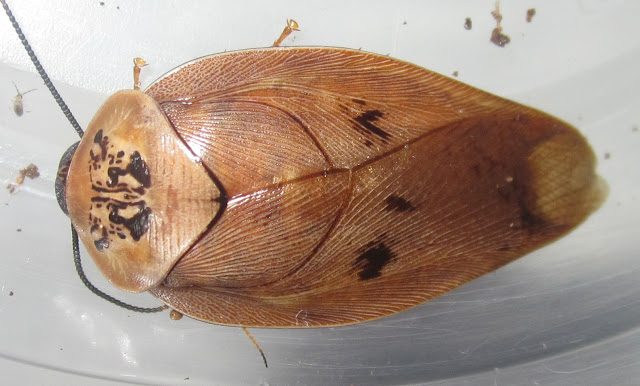
My Pseudomops septentrionalis are popping off, I'm quite happy to have a thriving culture of this species again, these are a true hobby staple IMO. 😊 

Got a couple half decent pictures of a group of adults the other day, figured I'd share here:


Hopefully they continue to do well for me for years to come!

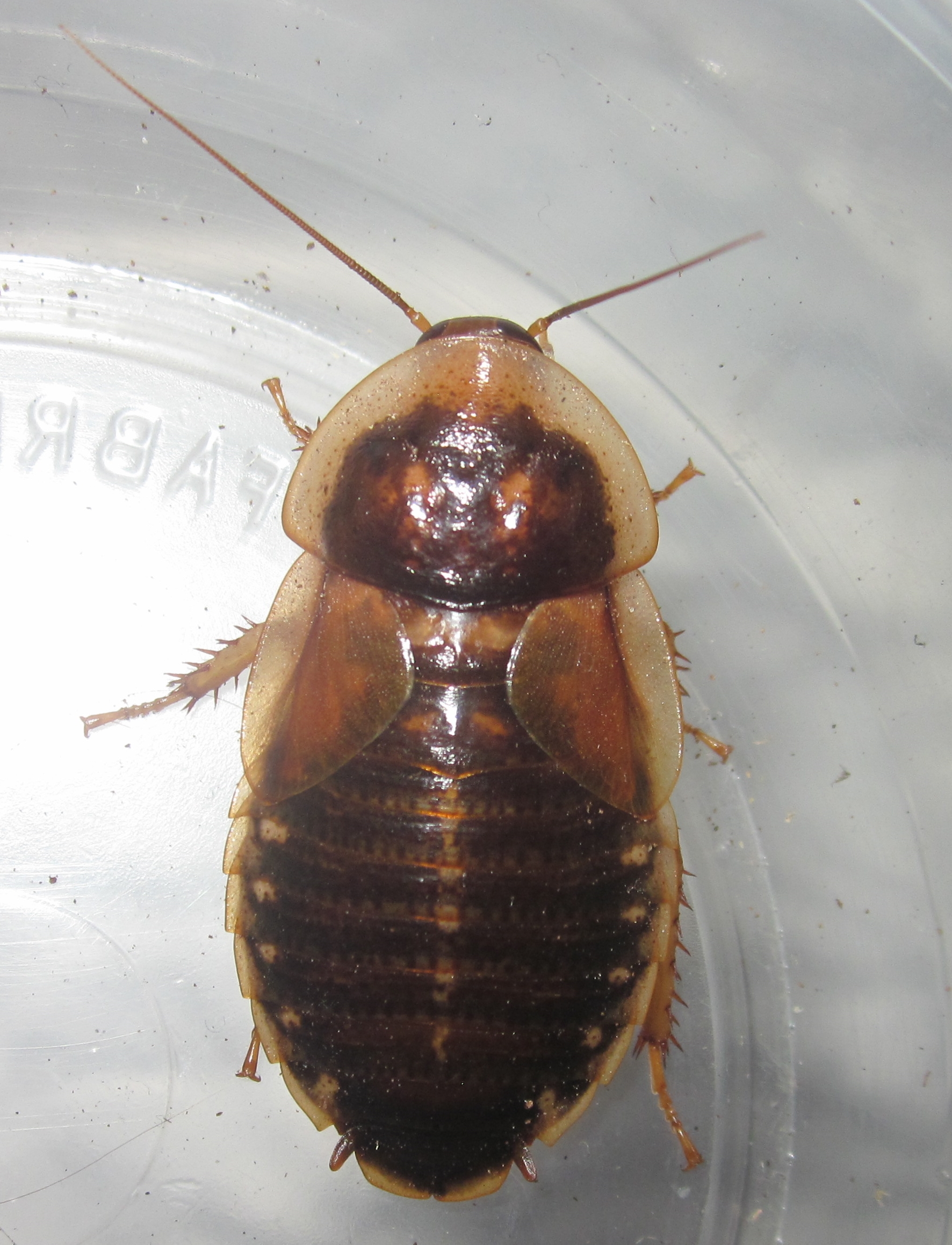
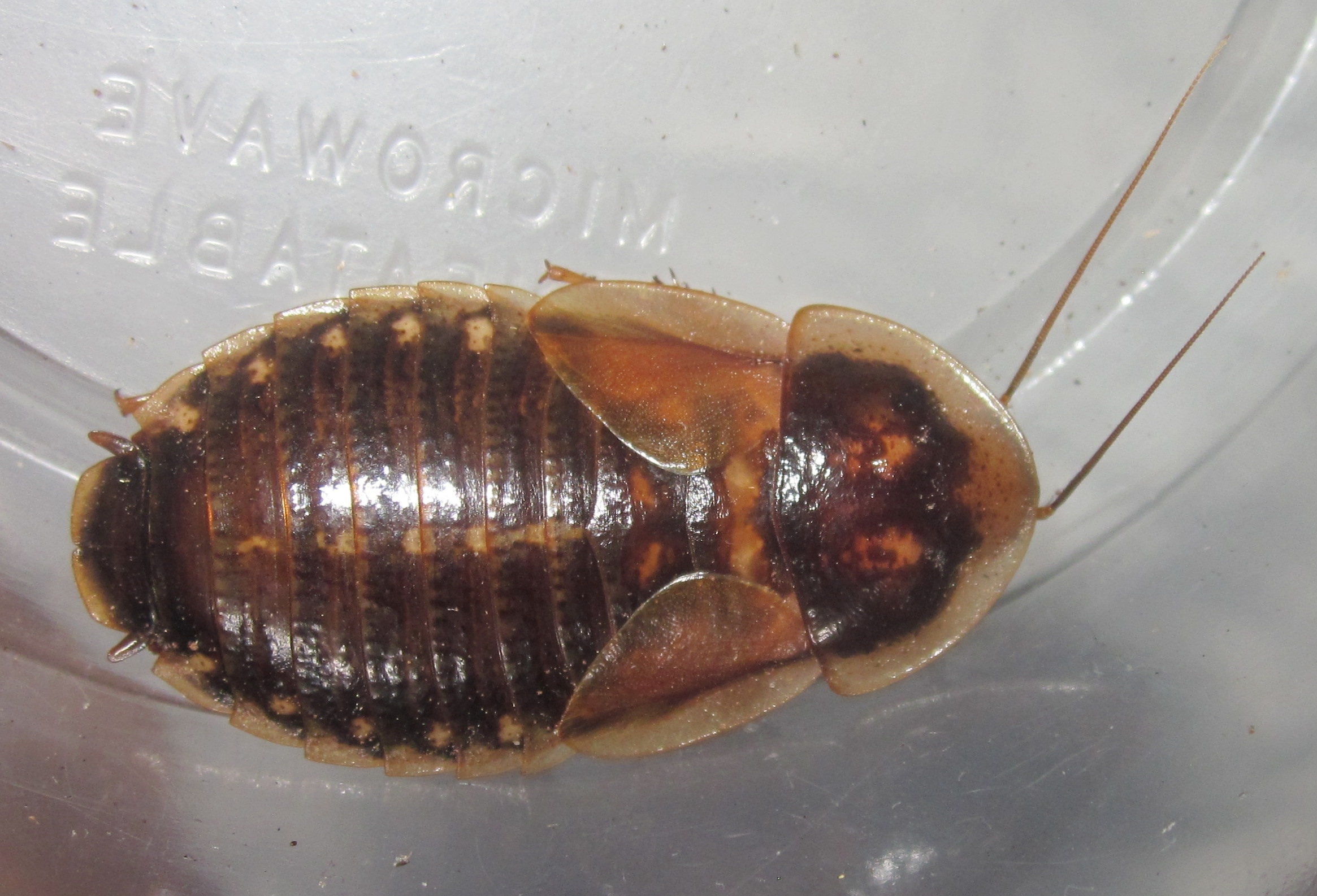
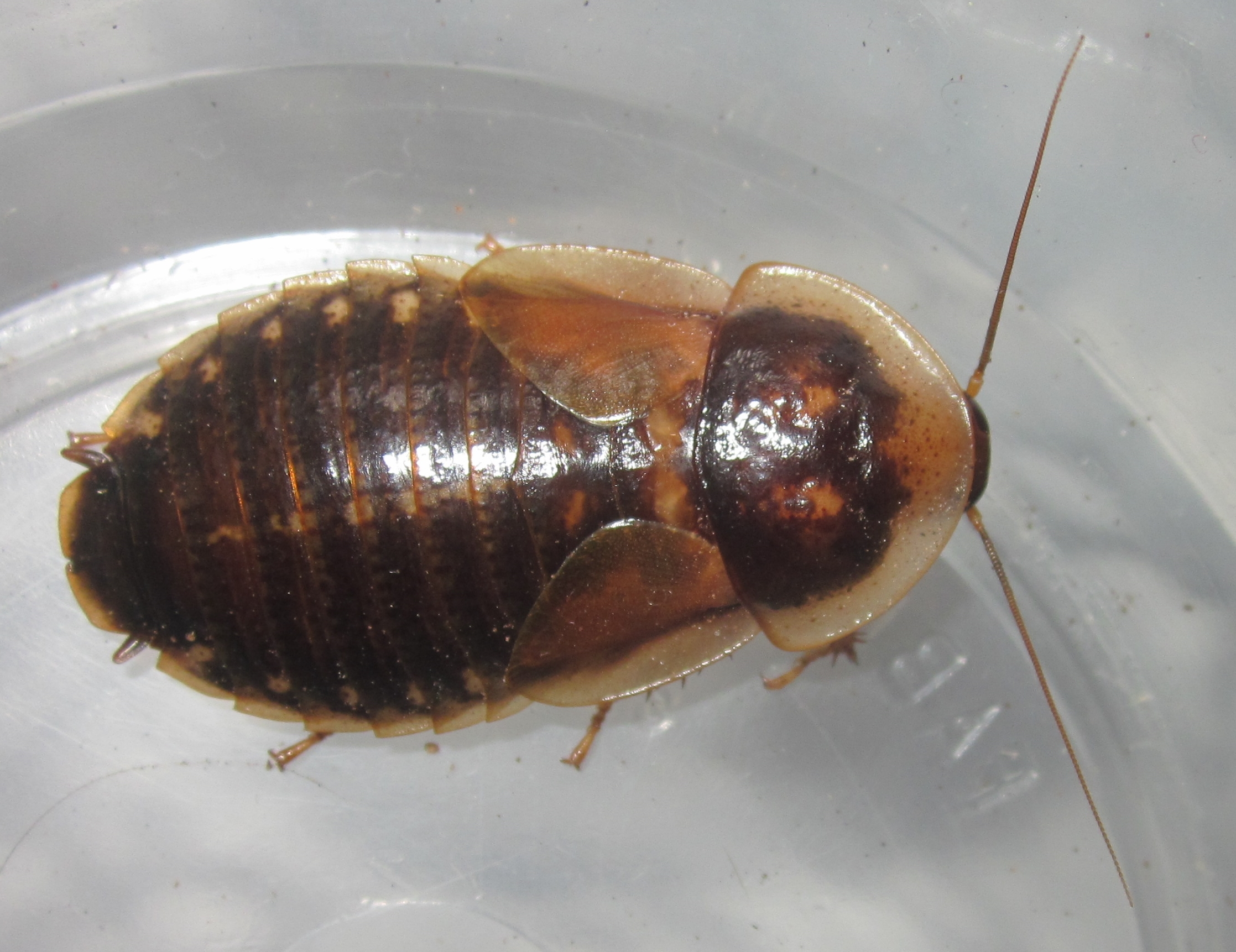
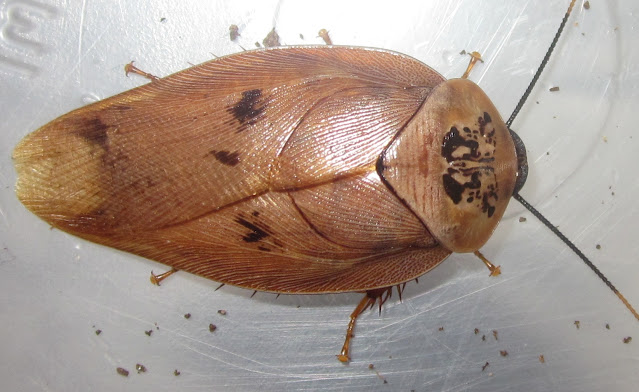
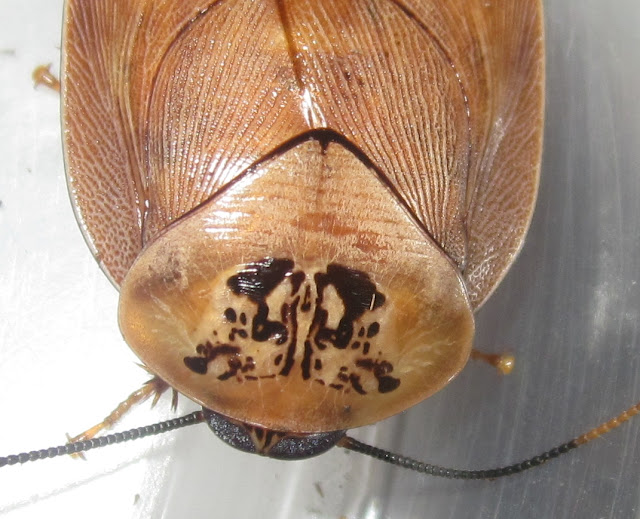
My Gyna capucina have had another brood or two born lately, looking like a really nice generation for sure! (as evidenced by their return to my for sale list). I've actually rehoused them to a larger enclosure recently, and am keeping them a bit more on the humid side, since the adults seem to really prefer the humid substrate (at least in my personal experience, with my abysmal air humidity, in areas with higher air humidity they probably would like substrate a bit more semi-humid).

I was checking on them recently and noticed one of the females airing out her ooth, while on the side of the enclosure... I only had my phone at that moment, but I had to snap some pictures because WOW their ooths are long! 😆 


Crazy right? No wonder they can have such large litters, though one has to wonder where the room is in their abdominal cavity for an ooth that size. 🤔 😂 

Next up, my Chalcolepidius webbii larvae are growing nicely, slowly but surely. Should probably be feeding them more frequently, but alas I'm being a bit lazy with them and my other clicks, and currently putting the most effort into getting some Deilelater and Ignelater adults to pop out hopefully by Summer. 

Anyways, here's a decent phone pic of one of the Chalcolepidius larvae:


There so cute and chonky. 😊 

Lastly, but not leastly, I've had some verh interesting Psocids pop up in my Porcellio magnificus colony. I sent some pictures to Psocid specialist Diane Young, who says they look to be Rhyopsocus disparilis, though she can't tell for sure without seeing specimens in person (which I'll be sending to her soon).

They're absolutely thriving in with the Porcellio on their driest side, but to be sure I did just set up a deli cup for them, with a mesh lid, a cm of coconut fiber substrate at the bottom (which I'll keep dry with a periodically moist spot), with a bunch of bark and cardboard stacked on top of that. Their favorite food seems to be artificial pollen, which I'm pretty much exclusively feeding them now. They actually sometimes make flimsy little silken covers over areas they congregate in, which I find really neat!

Here are some pictures of them, the all white individuals are nymphs, the adults have black heads, and tiny dark wings:


They're so small (though 2 mms is kinda large for a Psocid TBH), so it's hard to get good pictures of them, at least with my crappy camera, this is the best I could do. 😅 They're really cute though, and probably make decent cleaner crews for drier tanks, or feeders for tiny predators like Pseudoscorpions. 

I also found a species of Liposcelis in with one of my darkling beetle species, which I've also set up a deli cup for. They're a typical darker brown species, very tiny (way smaller than these cf. Rhyopsocus disparilis), but I've been wanting to get a culture of Liposcelis forever, so hopefully I can do that without much trouble.

Anyways, that does it for this post, thanks for reading, hope everyone enjoyed, and I'll see you all next time! 😉 

Wednesday, December 21, 2022

Better Chalcolepidius Larvae Pics, & Gyna capucina Update

Well, I decided to get some better pictures of one of my Chalcolepidius webbii larvae, since decent photos of the larvae of this species are essentially non-existent online... So I don't want those crappy phone pics of mine from a few posts ago to be the only ones available to the public. 😂

Here are some more well lit, decent pictures one one of my largest larvae:


Still got lots of growing to do, but so far so good in terms of growth and health. 😁

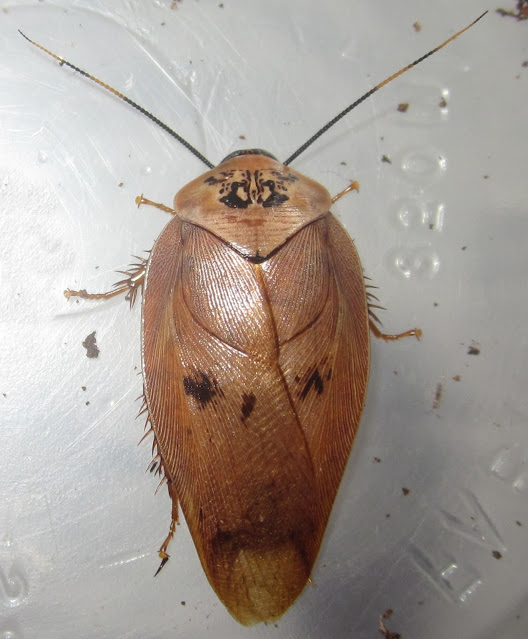
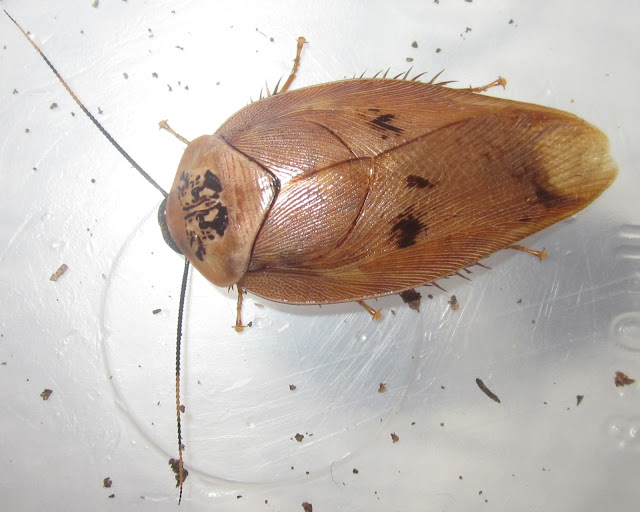
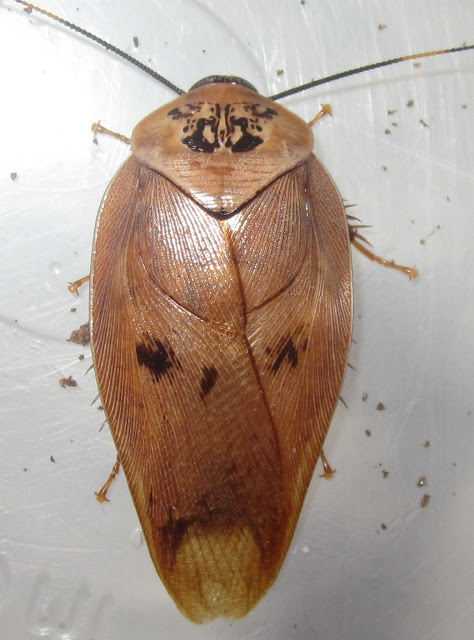
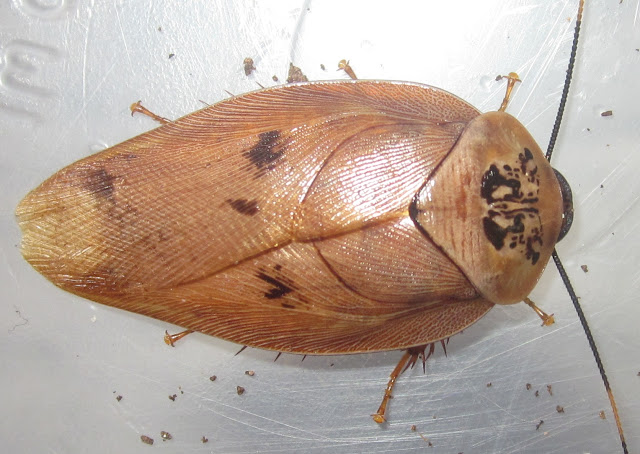
My next generation of Gyna capucina has started to mature out, which is awesome, hoping for more good broods this generation! 😊

Here are some pictures of one of the new females:


Looking good! 😄 Only a matter of time until I have a huge colony hopefully! 🤞

Well, that does it for this short post, thanks for reading, hope everyone enjoyed, stay safe, and I'll see you all next time! 😉

Wednesday, July 13, 2022

Gold Dubias, Pink Roach Babies & Baby Pseudoglomeris!!!

Finally, I have adults popping up in my Blaptica dubia "Unnamed Gold Morph" colony from Kyle of Roachcrossing! 😁 (You REALLY need to decide on a name for these Kyle... 🙃).

The females are quite a bit darker than I was expecting, though I suppose I'd just forgotten that traditionally the females of "Gold" dubia lines are pretty dark in comparison to more yellow lines, like JohnFrost's "Amber Dubia" strain (which coincidentally have also just become publicly available). The males of Kyle's "Gold" strain are very pale though, as are the nymphs, and overall all life stages are very close in appearance to the EU "Gold" lines of dubia out there, without the accompanying health issues and poor breeding vigor those lines usually have.

Here are some pics of an adult pair:

Adult female


Adult male


Adult pair


Very pretty strain, really hope they'll breed well for me! As far as my first dubias go, glad I got to work with this strain! 😁

I'm happy to report that my Gyna capucina have had babies! 😁 And I'm talking dozens of the things, seems like one of the females had a decent sized litter! Upon the suggestion of my buddy Alan Jeon, I've been keeping my adults separate from their nymph siblings, as it seems like larger nymphs might stress out the females of the larger Gyna spp. (at least in small enclosures). I also gave my adults a shallow but very chunky and well aerated substrate. I honestly haven't been keeping them very hot, only like 75-80F°, and still that's been enough to breed them. Very happy to have finally successfully bred these beauties, which are direct descendants of the old colony I received from an old friend of mine years ago. 😊

Lastly, last night I found that one of my last two female Pseudoglomeris tarsalis had given birth to a full sized litter of 15-20 nymphs! 😁

This species has NOT been doing great for me, as I'd mentioned in a previous post, and even in their new setup with no males and less springtails, they just weren't doing well. So, I decided to pull a Hail Mary, and threw my remaining two females in my Pseudoglomeris aerea "Yunnan" setup (of course, after removing the one adult male aerea that was in there, since I don't wanna make hybrids).
The P.aerea have been doing phenomenally, so I thought that by throwing the tarsalis in there, they would benefit from the allee effect, since there's a lot of healthy aerea nymphs bustling around in there. I also though they may possibly prefer just the aerea setup itself, perhaps the specific humidity gradient and ventilation levels of that enclosure were more conducive to breeding Pseudoglomeris than the tarsalis's old setups (despite me attempting to keep them essentially the same).

Either way, it worked, and I managed to save my tarsalis. 😅 Hopefully the other female gives birth soon, then begins the process of me removing all the tarsalis from that setup before Fall when I throw the aerea into their diapause... and/or before any aerea start maturing, whichever comes first, can't be making hybrids after all... 😂

Well, that's gonna do it for this post, thanks for reading, hope everyone enjoyed, stay safe, and I'll see you all next time! 😉

Tuesday, January 11, 2022

Gyna, Gyna, & More Gyna!

Well, I've got at least five adult female Gyna cf. sculpturata now, and two adult males! Sadly, while males are initially quite brightly colored after maturing, they lose that coloration very quickly, and fade to a tannish color like a week or two after maturity... Females on the other hand look beautiful and pink basically up until they're on death's door. 😂 

Anyways, I got pictures of one of my males for the heck of it, though sadly he had become quite dull in coloration already. But since this is a pretty accurate representation of what males look like most of their lifespan, I think it's still worth sharing:


Here's hoping these males do their job, and I'm overrun with baby Gyna cf. sculpturata soon! 😃

Speaking of babies, I found newborns in my Gyna bisannulata enclosure the night after Christmas! 😁 So happy I bred these beauties, here's hoping there's more offspring where these came from! If so, I might be able to add some groups to my availability list later this year... 😉
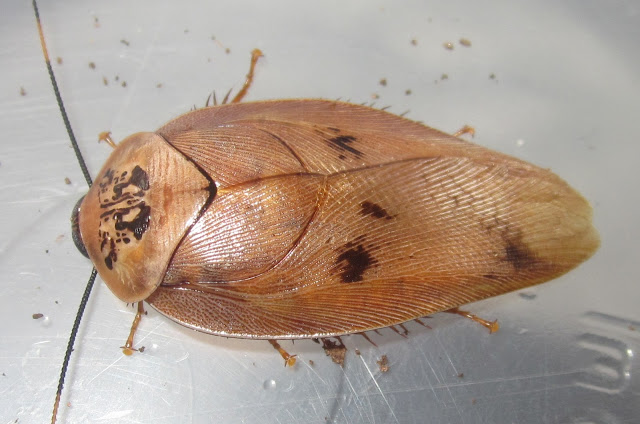
Emboldened by my success with bisannulata, I decided to ask my friend Ty Randall (of Ty Dye Exotics) for some Gyna capucina. Ty wasted no time in sending me some when he got the chance to check his culture, so now I've got a second chance with these beauties! 😅 This time I'll be applying all the knowledge I've gained from failing fantastically at breeding them last time, and will be sure to keep the adults extra hot and well ventilated for breeding!

Well, that's gonna do it for this Gyna extravaganza, thanks for reading, hope everyone enjoyed, stay safe, and I'll see you all next time! 😉