Showing posts with label Eurycotis opaca "Jaruco". Show all posts

Tuesday, January 23, 2024

Brandon's Ballin' Box!

A few months ago I got in a big old box of bugs from Brandon Maines at Magnificent Beasts, mostly stuff I've previously had and either failed with, and some stuff I still have but wanted booster groups of just to be safe. Namely these species:

Blattidae sp. "Philippines"
Cariblatta lutea "Brooksville"
Cristarmadillidium muricatum
Eublaberus marajoara
Eurycotis opaca "Jaruco"
Princisia vanwaerebeki "Black & White"
Pseudoglomeris tarsalis 
Troglodillo sp. "Green Spot"
Therea bernhardti
Therea regularis

Plus, both Brandon and Junior Marquez sent me the very last of their failing Pseudoglomeris aerea colonies. I had sent the last of mine to Brandon earlier this year to see if they'd do better for him, unfortunately they did not... and Junior's weren't much better off. So, all in all I've got one adult male, one subadult female and two presub females... I think the three big parts of my previous failure with this species were:

  1. Too much ventilation in their enclosure considering how low my ambient air humidity is. This caused dehydration, but keeping the enclosure more humid caused their bark and too much of the substrate to become moist to the touch, which these loath. Ideally you want high air humidity and low surface moisture with this species, so limiting my ventilation a bit more in the future will be necessary to work with this species. 
  2. Improper hide choices also likely stressed my colony out, I used too flat of bark hides, without enough nooks and crannies for nymphs to hide and feel safe in. This time I'm using cork bark for hides, which seems to be the best hide choice for Perisphaerinae in general.
  3. Poor temperature control, especially in the Summer. I think I let my culture get too warm last Spring/early Summer, due to space constraints in my last place of living. Now that I've moved into a new house though, I should have no issues keeping them at the proper temps year round.
Taking all these issues into consideration, I'm hoping I can salvage this colony, and keep this species going in culture. 🤞 

Now, onto the few species he sent me that I've actually never kept before! First off, we have Ergaula cf. silphoides "Hobby Stock". Formerly labeled as "Ergaula pilosa", as we covered in a previous post, this species is not true E.pilosa, and is most likely E.silphoides (with the previously rumored locality data for this stock of "Malaysia" likely being inaccurate). But I wanted to see in person to confirm this suspicion, especially since I've struggled to find photos that very clearly show the morphological features I'm looking for.

Anyways, I've got then set up in a well ventilated enclosure with an inch or two of coconut fiber substrate, which I'm keeping two thirds humid, one third dry. I'm feeding them dog food and leaf litter for the staple diet, and am keeping them at 75-85F°.

Here are some pics of the fuzzy nymphs:


Here's hoping for adults within the next several months. 🙂

He also sent some Anthrenus sp. larvae from his former home in Osceola Mills, PA. Initially he thought they were Dermestes lardarius larvae, which I was quite excited to keep, but on arrival I was instantly able to tell they were not Dermestes larvae, but rather Anthrenus instead. No idea which species it is, but nevertheless, happy to now have two different strains (and hopefully two different species) of this genus in my collection now.

Here are some pictures:


Hopefully they'll mature soon and establish a colony with little difficulty. 😃

And lastly, he sent some Porcellionides cf. virgatus "Miami, FL", which is in the same species complex of "Porcellionides" as the sp. "Big Pine Key" and "Everglades" strains. I think there's only two other strain of this Florida complex in culture that I don't yet have, so I'm getting closer to having them all. 😂 These "Miami" are actually prettier than I thought they were, definitely a strain that looks better in person than in photos.

As with the other two lines of this complex I keep, I have this Miami strain in a well ventilated enclosure with an inch or so of coconut fiber substrate, topped with bark hides and leaf litter. I'm keeping most of the enclosure humid, and at around 75-80F°. In addition to the leaf litter they are being offered dog food for their diet.

Here are some pictures of them:


Definitely a neat isopod with some variable coloration, hopefully they'll breed as well for me as the "BPK" and "Everglades" lines have!

Well, that does it for this post, thanks for reading everyone, hope you all enjoyed, and I'll see you all next time! 😊 

Wednesday, February 8, 2023

January/February 2023's Fails

It's that time again, time to take a look back and see what losses my collection has suffered in the past couple months. 

Well, unfortunately my single male Eurycotis opaca "Jaruco" died, right after maturing. This was seemingly due to a Serratia bacteria infection, seems this batch of E.opaca came in infected with the stuff, and sadly my male happened to die as a result... 😢

Funnily enough, my sole female E.opaca "Soroa" also died due the same reason. However, there was a stray ooth in their shipping cup I had missed, which hatched about a month ago, so I have a decent amount of nymphs to work with it that strain thankfully.

However, this leaves me with a single adult male "Soroa", and an adult female "Jaruco"... I don't advocate for locality crosses, and their offspring will almost certainly look worse than either pure locality IMO, BUT I've always wondered what an intergrade between the two would look like. So, I guess I'll make that happen. 🤷‍♂️ I won't sell the offspring obviously, this is just to quell my own curiosity. Both these adults would die unmated anyways if I left them alone, so might as well see what happens when they cross (which could prove useful for identifying potential locality "hybrids" of this species, if those were to ever start flooding the market).

For whatever reason, my Cariblatta lutea seem to be failing. I got a strong and fast initial round of hatches not too long after getting these from Kyle, but the nymph survival rate has been abysmal thus far, and I've no idea why. 🤔 I still have a breedable number of nymphs, but not sure the population will actually grow much this generation, very odd, considering I feel my husbandry is on point for them.

Another Pseudophyllodromid that's taken a big L in my collection, Margattea cf. bisignata "Macao". Unfortunately I underestimated just how well my Perisphaerus punctatus were doing, and they outcompeted the Margattea in their enclosure before I realized what was going on. I have a single adult male, and a subadult female left... Whether this will be enough to save my culture, I'm not sure, but I'm not holding my breath... Though thankfully, at least two of the people I sent this species to here in the US have thriving colonies still, so I'm not too concerned with their state in the hobby. 😊

Now this is quite a bummer for me, but my Tafalisca eleuthera adults all died, one after the other, all prematurely, and seem to have barely reproduced in my care at all. I'm not sure why, because my husbandry parameters are pretty much the same as Kyle's, so they should have been fine, and indeed I raised them from nymphs with no problems.

I have found a total of four hatchlings so far, but I'm pretty sure that's gonna be it... It seems like my females didn't find my enclosure at all suitable for oviposition, depite them having bark, substrate, and cotton balls to potentially oviposit into (all of which are documented egg laying sites for them). Pretty disappointing outcome, considering how enamored with this species I am. 😢

My Ceuthophilus chiricahuae are also doing very poorly, and I'm not entirely sure why. The adults acted extremely territorially towards each other, and the false didn't lay a ton of eggs. A lot of the eggs they did lay simply rotted, and while the half dozen or so offspring that are remain are stable and growing well, I have less than I started with now... 😐 I do still have an adult female, but I've no idea if she's actually gravid, let alone mated. 
Anyways, I moved them to an enclosure with better ventilation, in a slightly warmer location, and will probably give them an actual humidity gradient rather than keeping the entire enclosure humid, just to see if that all helps the next generation do better.
So not a total loss for this species mind you, but awfully close.

Well, I found out why the Asbolus verrucosus Joshua sent me weren't doing well well. They didn't have entomophagous fungus, rather they were infected with parasitic wasps. 🙃😂 Four of the six Joshua sent me unfortunately died and had wasp larvae emerge from them, which instantly burrowed into the substrate and formed silky cocoons.

I know I should probably rear some of these wasps up, take pictures, etc. for the sake of documentation... But f**k it, I don't wanna risk some of these SOBs escaping and parasitizing any of my other Cryptoglossini, or god forbid any of my other Tenebs (though parasitic wasps DO tend to be very host specific). These crappy phone pics of their cocoons before I destroyed them is the best I can do:


So yeah, apparently not allowed to keep BDFBs... 🙃😂 Though a friend of mine reached out and offered to send me more, an offer which I'll probably take them up on next month or so.

Well, that about sums up all my failures of 2023 I think. 😅 Not too bad so far I guess. Thanks for reading, see y'all next time!

Sunday, November 20, 2022

More New Roach Additions!

Got some more new additions to share in this post! 😁 First, let's start off with Eurycotis opaca "Soroa". These have been on the brink of dying out in the US hobby for a couple years now, though hopefully that will soon change. I've got a pair of nymphs to work with myself, but they were part of a much larger group that ended up going to one of my friends, who will hopefully be successful in establishing a colony. 😊

It seems this species actually likes much more humid conditions than we had previously thought, so I'm keeping my pair pretty humid, and only moderately ventilated. They've got a thin layer of coco fiber as the substrate, and paper towel rolls and eggcrates for hides. Feeding fruits and dog food (they seem to prefer the former), and keeping them at around 75-85F°.

Here are some pictures of a couple adult females:


These are big, beautiful Blattids, that I hope will become better established in the US hobby soon!

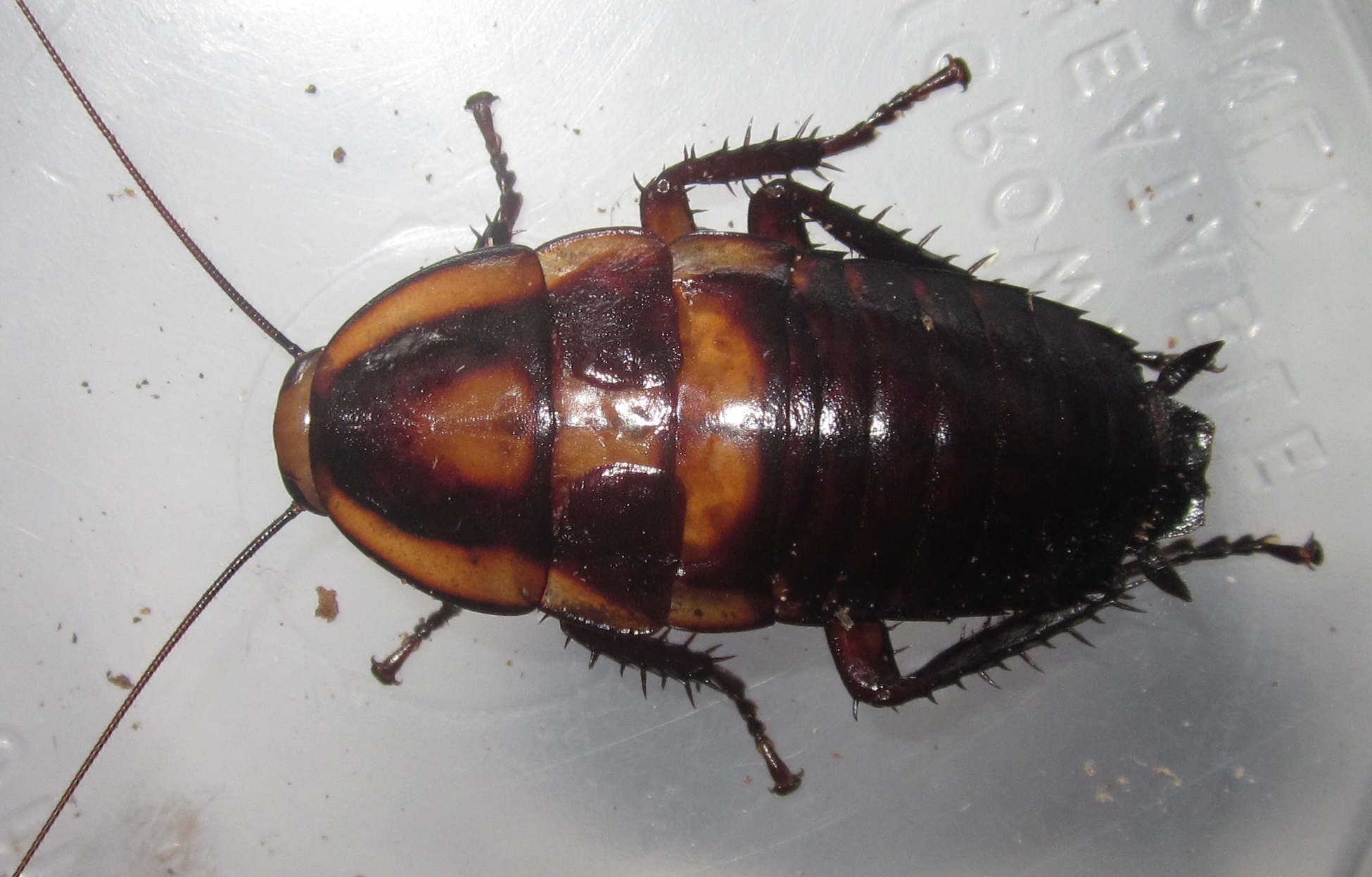
However, in terms of beauty, Eurycotis opaca "Jaruco" DEFINITELY have "Soroa" beat. That's why I'm very glad to say we got a big group of these to hopefully reestablish them in the US hobby! 😁 Again, I'm keeping a nymph pair for myself, the rest are going to a couple friends of mine, hopefully we'll all be successful in our breeding efforts with our newfound knowledge of their preferred humidity levels.

Much like my "Soroa" pair, I'm keeping my "Jaruco" pair in a humid, moderately ventilated container. They've got a thin layer of coco fiber as the substrate, and paper towel rolls and eggcrates for hides. Feeding fruits and dog food (they seem to prefer the former), and keeping them at around 75-85F°.

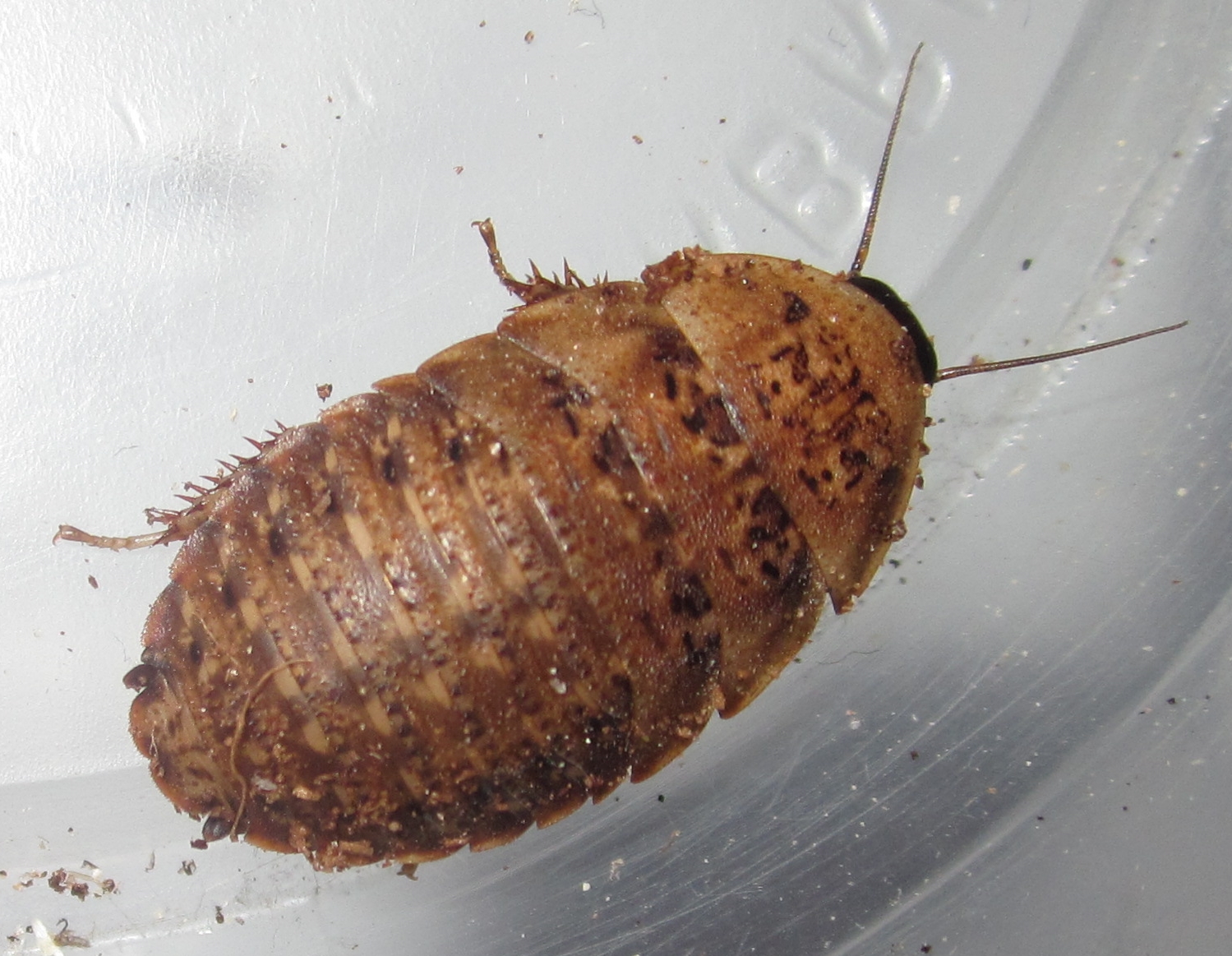
Here are some pictures of a nymph and an adult male:

Nymph
Adult male


I REALLY hope these get reestablished in the US hobby, these are an iconic pet cockroach, one I'd love to see more widespread in the hobby in the future.

Lastly, another reintroduction to the US hobby, Blaberus cf. chacoensis "Pantanal". These are one of the bulkiest and most unique looking Blaberus spp. in culture, however they also seem to be one of the most finicky and slow breeding, and that plus a lack of interest in keeping them led to their functional extinction in the US hobby a few years back. Now we've got another chance to get them better established here though, here's hoping this time, they're here to stay! 🤞😅

I've got two nymph pairs, and have them housed in a moderately ventilated container with a couple inches of coco fiber as the substrate, and some paper towel rolls and bark for hides. I'm keeping them humid, and at around 75-85F°. I'm feeding them dog food and fruits.

Here are some pics of some nymphs:


Definitely looking forward to seeing adults of these in person! 😊

Well, that does it for this post, thanks for reading, hope everyone enjoyed, stay safe, and I'll see you all next time! 😉