Showing posts with label Orchesella cincta. Show all posts

Monday, May 30, 2022

May's Ups & Downs

Got some ups and downs that happened this month that I figured I'd post here before June, in between more positive posts. 😄

Let's start with some sad springtail updates. So first off, my Willowsia nigromaculata have become thoroughly infested with Willowsia sp. "Kota Kinabalu"... Which is very unfortunate. I honestly don't know that I'll be able to salvage enough of the nigromaculata to establish a colony again, but I'll do my best.

Secondly, my black Isotomidae from Boise just never took off, and I can't collect them again, so that project is dead in the water. 😢

Thirdly, my Orchesella cincta colony has all but collapsed, mainly due to predatory mites. I then moved my remaining individuals to a smaller deli cup, but didn't give them enough airflow, so despite them doing OK initially and breeding in that setup, one over watering was all it took to bring their numbers back down to half a dozen mixed sizes.

Next up, a more positive update. One of my Gromphadorhina portentosa "LLE Mahogany" females gave birth to a good sized litter! 😁 Said babies are doing quite well and have molted to L2 already.

Weirdly one of the larger females aborted her entire ooth shortly afterwards, and I'm not sure why... 🤔 But in any case most of the females seem super gravid and will probably give birth soon as well, so no big loss there (already they give birth to so many babies per brood! 😅).

Now for another sour update, this time about one of my darklings... Unfortunately I've completely failed with Doyenellus cisteloides. 😭 

I gave them a coconut fiber substrate, which the females did eagerly lay in, and I got lots of tiny larvae from them. However, the larvae died very shortly after hatching, and I'm pretty sure they actually needed a rotten wood substrate to survive... Mixing in a bit of rotten wood into the top layer of coconut fiber after I realized this was not enough, and all the offspring sadly perished. Not only that, but all the adults died off too, seemingly of natural causes (I'm pretty sure Helopini live rather short adult lives in general). So, quite a bad mistake on my part, but at least I know better for working with this tribe in the future. 🙁

Another downer update, though not as irreparable as the former. My Nocticola sp. "Malaysia" colony crashed... Because the Coecobrya sp. "Tropical Pink" (ex. Sinella curviseta) that got into their bin outcompeted and essentially wiped them OUT. 🙃 So that's fun. Thankfully there were still some Nocticola in there, so I've isolated them to start a new culture. But yeah it's gonna take a little while to get them going again, and now I have to be diligent not to let springtail populations get too high for them. The joys of roach keeping lol.

But I think that does it for the misc May updates I have that don't warrant pictures being taken. So, thanks for reading, hope everyone enjoyed and learned from this post, stay safe, and I'll see y'all next time! 😉

Friday, January 7, 2022

New Malaysian Springtails!

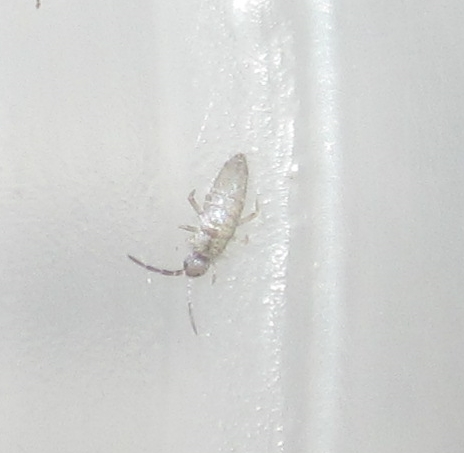
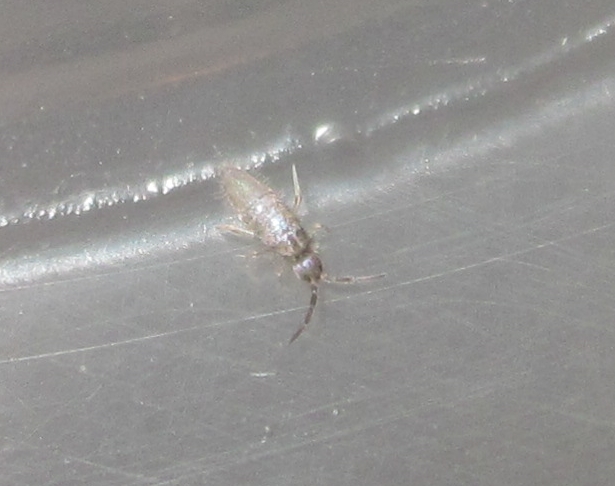
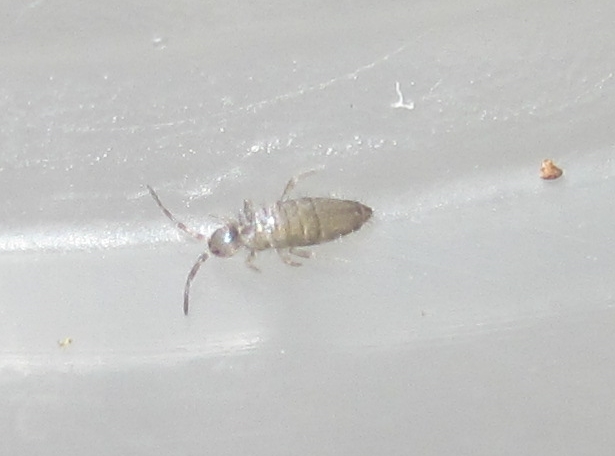
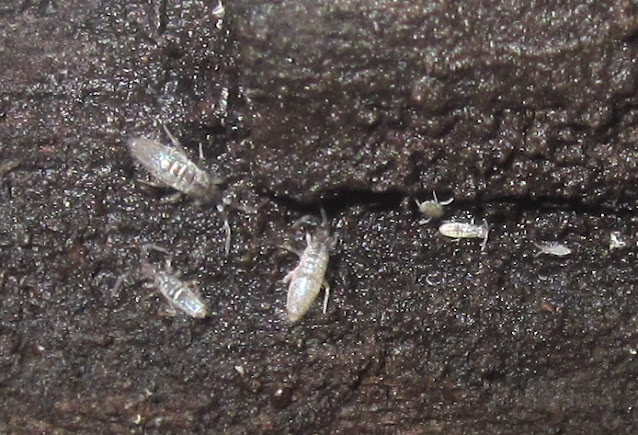
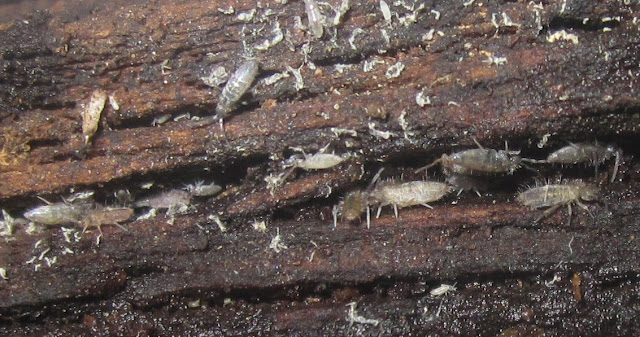
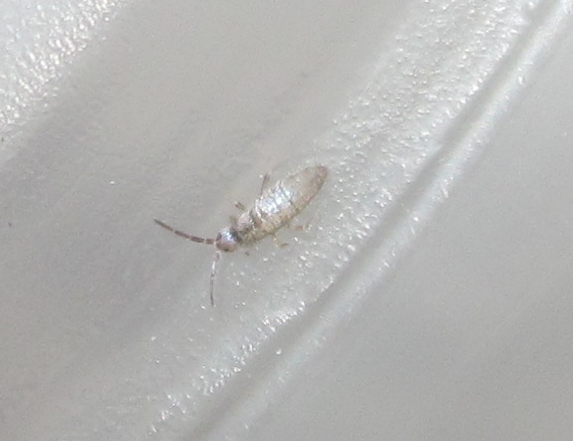
Interestingly, those Copper-green Perisphaerus sp. from Kota Kinabalu, Malaysia came in with some hitchhikers! 😅 I mean, they came in with several; white worms, a weird little millipede species, but most notably, these decently sized Silver Springtails! 😁 While it's unclear if these are a Malaysian native or not, they're definitely new to US culture, and are proliferating quite well in my Perisphaerus culture to boot! I'm actually seeing them pop up in a few surrounding enclosures as well, so it might only be a matter of time before I have them in every culture of mine. 😂

I emailed springtail scientist extraordinaire, Frans Janssens (creator of the wonderful website Collembola.org), and he tentatively identified them as a species of Willowsia. They very highly resemble the Willowsia buski I used to have in my collection in terms of morphology, they're just almost twice the size, and a much paler silver color (whereas W.buski are bluish silver). So for now, I'll be calling these cf. Willowsia sp. "Kota Kinabalu", with the common name "Malaysian Silver Springtails". 🙂

As for husbandry, these seem to be a simple to keep and prolific species, they like high humidity and seem to also appreciate decent airflow too. They seem to play well with small silvers springtails, but compete with Entomobrya unostrigata in cultures, and can outcompete them in sufficiently humid setups.

Anyways, here are a few pictures I took of them:


Some Malaysian Silvers, alongside Entomobrya
Overall, a nice new addition to my collection and the US springtail hobby as a whole! Speaking of which, if you want some yourself, feel free to check out my For Sale page here! 😉

While I'm at it, I found babies in my Orchesella cincta enclosure the other day! 😁 They're a dull brown color, but I know they'll gain their beautiful black coloration with the white and yellow highlights soon enough.

Anyways, that's gonna do it for this post, thanks for reading, hope you enjoyed, stay safe, and I'll see you all next time! 😉

Thursday, December 30, 2021

Two New Giant Springtails!!!

I'm actually getting into springtails in a way I haven't in a long time now, and hope to be able to obtain several large and/or pretty species of predatory mite resistant springtail species this year! 😁 There to help feed my rekindled interest in Collembola is enthusiast Ryne Pavy (AKA @ryneboi on IG), who I've recently done a trade with in exchange for two large species of springtails!

Let's start off with my new "Giant Belted Springtails", Orchesella cincta. These beauties are supposedly quite easy to rear, though they need lots of airflow to do well, and get caught in condensation easily. There is some debate as to their preferred humidity requirements, but I'm erring on the side of higher humidity, due to their decent airflow and my abysmal air humidity.

I've got my dozen or so in a decently ventilated enclosure with a thin layer of potting/top soil (which they were shipped with) as their substrate, and sphagnum moss and bark hides on top. I'm keeping them humid and cool (68-73F°), and feeding them dog food, chick feed, etc., as well as mold technically (since I'm not removing uneaten leftovers).

Here are some pictures of one of the larger specimens:


The largest individuals in my culture seem to be the same size, if not a bit smaller than my Tomocerus minor, so a large springtail for sure, and they may still have some growing to do. Hopefully they'll breed well for me!

Next up we have the larger of the two, the "Giant Silver Bullet Springtail", Pogonognathellus dubius. These may not be as colorful as the O.cincta, but they are in fact bigger than my Tomocerus minor, not by that much, but definitely a bit longer and bulkier. They may not be full grown yet though, so we'll see if the size disparity gets even more noticable over time.

I've got my 15 or so in a nearly identical setup to my O.cincta, but I'm keeping them more humid since this species enjoys higher humidity (they are still well ventilated though). 

Here are some pics of one of my larger individuals:


One cute this about this species is it's ability to curl it's long antennae up, something I've not noticed in any of the other springtails I keep (perhaps because none of their antennae are as long as the ones on these P.dubius). Fingers crossed these breed for me, supposedly they are quite the prolific and hardy species!

Anyways, that's it for this post, big thanks to Ryne for this trade, looking forward to seeing what other springtails he introduces to culture! 😄 Thanks for reading, hope everyone enjoyed, stay safe, and I'll see you all soon! 😉