Showing posts with label Chalcolepidius webbii. Show all posts

Monday, November 13, 2023

Elaterid Updates

Got several Elaterid updates for y'all, so let's get started!

My remaining 2020 Deilelater physoderus larvae finally started maturing a couple months ago, seems high temperatures are needed to reliably induce pupation. This species isn't very long lived as adults, but they are quite prolific regardless, and so I've ended up with tons of larvae yet again. If anyone's interested in this species, I have some larvae up for grabs ATM, it may be another couple years until I have them available again (maybe longer if I'm lazy in feeding my larvae... 🤣).

Sadly, my Deilelater cf. atlanticus have proven to be a huge pain. Despite also being kept warmer, only two of mine have matured this year, each several months apart from each other, so no breeding was possible. A couple larvae up and died for no reason too, so I'm down to three large larvae. For whatever reason, the larvae of this species have been extremely slow growing and don't seem to eat much, I've tried a variety of substrate types, food items, humidity and temperature levels/fluctuations, nothing seems to get them growing faster or reliably induce pupation. I doubt I'll be successful in breeding these, and expect the remaining larvae to either pupate sporadically or die within the next several months.

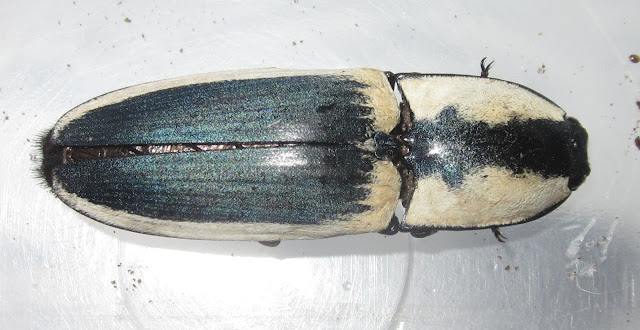
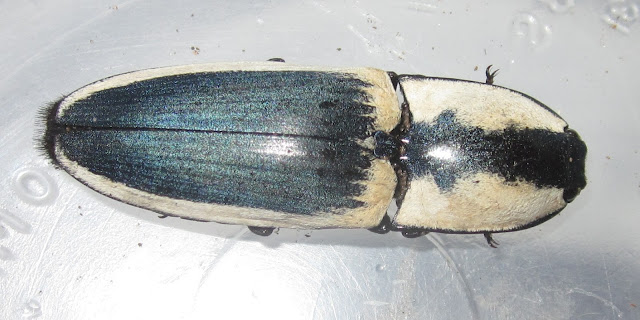
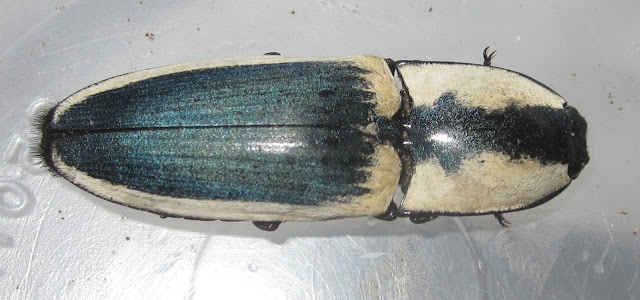
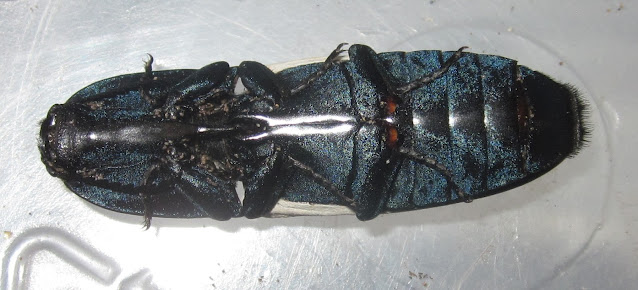
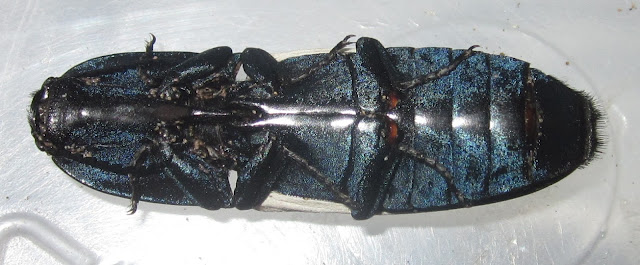
Now for some Chalcolepidius updates. I've had three C.webbii mature so far, all females, and one has already kicked the bucket a virgin (along with a virgin female Alan sent me a month or two ago)... I'm hoping a male the remaining larvae will also start pupating soon, and hopefully a male will pop up in a timely manner. 🙃

Here are some pictures of one of the CB females:


As for my C.smaragdinus, I was surprisingly able to get 4 larvae... which is abysmal from a group of 4 females, but better than nothing (which is what I was expecting). Hopefully I get super duper lucky and end up with a pair, but I'm not holding my breath. 

Lastly, some Alaus updates. First, some of my Alaus lusciosus are FINALLY starting to mature. So far I have three fresh adults, and I'm hopeful more will start pupating soon, so fingers crossed I get at least a sexed pair or two to maturity at the same time. 🤞 

Here's a crappy phone pic of one of the A.lusciosus CB adults:


Secondly, Brandon sent me six Alaus oculatus larvae, from a female he collected himself from Osceola Mills, PA. So I now have larvae of the most common and widespread Alaus species. 😀

Not only that, but Alan sent me the substrate from his Alaus zunianus bin, which I was able to isolate 30 larvae from. However, they've had some unexpectedly high mortality rates, and so I'm currently sitting at 22 larvae for now. This is the LARGEST US Elaterid, and rarest of the US Alaus spp., so I'm super stoked to finally have a breeding group of larvae to work with, hopefully the mortality rates will go down as they get larger in size! 🤞😅

And finally, Alan also sent me a single mated adult female of Alaus patricus. This strain was collected from Florida, where they are invasive to, this species is actually native to the West Indies. It's an attractive species, quite differently patterned from the US natives. Hopefully she lays lots of eggs for me, fingers crossed!

Here are some pictures of the beauty:


Would love to get larvae from this species, so I'll definitely pamper her and do my best to induce oviposition.

Well, that about does it for click beetle updates. Thanks for reading, hope everyone enjoyed, and I'll see you all next time! 😉 

Tuesday, May 9, 2023

Random Bug Updates

My Pseudomops septentrionalis are popping off, I'm quite happy to have a thriving culture of this species again, these are a true hobby staple IMO. 😊 

Got a couple half decent pictures of a group of adults the other day, figured I'd share here:


Hopefully they continue to do well for me for years to come!

My Gyna capucina have had another brood or two born lately, looking like a really nice generation for sure! (as evidenced by their return to my for sale list). I've actually rehoused them to a larger enclosure recently, and am keeping them a bit more on the humid side, since the adults seem to really prefer the humid substrate (at least in my personal experience, with my abysmal air humidity, in areas with higher air humidity they probably would like substrate a bit more semi-humid).

I was checking on them recently and noticed one of the females airing out her ooth, while on the side of the enclosure... I only had my phone at that moment, but I had to snap some pictures because WOW their ooths are long! 😆 


Crazy right? No wonder they can have such large litters, though one has to wonder where the room is in their abdominal cavity for an ooth that size. 🤔 😂 

Next up, my Chalcolepidius webbii larvae are growing nicely, slowly but surely. Should probably be feeding them more frequently, but alas I'm being a bit lazy with them and my other clicks, and currently putting the most effort into getting some Deilelater and Ignelater adults to pop out hopefully by Summer. 

Anyways, here's a decent phone pic of one of the Chalcolepidius larvae:


There so cute and chonky. 😊 

Lastly, but not leastly, I've had some verh interesting Psocids pop up in my Porcellio magnificus colony. I sent some pictures to Psocid specialist Diane Young, who says they look to be Rhyopsocus disparilis, though she can't tell for sure without seeing specimens in person (which I'll be sending to her soon).

They're absolutely thriving in with the Porcellio on their driest side, but to be sure I did just set up a deli cup for them, with a mesh lid, a cm of coconut fiber substrate at the bottom (which I'll keep dry with a periodically moist spot), with a bunch of bark and cardboard stacked on top of that. Their favorite food seems to be artificial pollen, which I'm pretty much exclusively feeding them now. They actually sometimes make flimsy little silken covers over areas they congregate in, which I find really neat!

Here are some pictures of them, the all white individuals are nymphs, the adults have black heads, and tiny dark wings:


They're so small (though 2 mms is kinda large for a Psocid TBH), so it's hard to get good pictures of them, at least with my crappy camera, this is the best I could do. 😅 They're really cute though, and probably make decent cleaner crews for drier tanks, or feeders for tiny predators like Pseudoscorpions. 

I also found a species of Liposcelis in with one of my darkling beetle species, which I've also set up a deli cup for. They're a typical darker brown species, very tiny (way smaller than these cf. Rhyopsocus disparilis), but I've been wanting to get a culture of Liposcelis forever, so hopefully I can do that without much trouble.

Anyways, that does it for this post, thanks for reading, hope everyone enjoyed, and I'll see you all next time! 😉 

Wednesday, December 21, 2022

Better Chalcolepidius Larvae Pics, & Gyna capucina Update

Well, I decided to get some better pictures of one of my Chalcolepidius webbii larvae, since decent photos of the larvae of this species are essentially non-existent online... So I don't want those crappy phone pics of mine from a few posts ago to be the only ones available to the public. 😂

Here are some more well lit, decent pictures one one of my largest larvae:


Still got lots of growing to do, but so far so good in terms of growth and health. 😁

My next generation of Gyna capucina has started to mature out, which is awesome, hoping for more good broods this generation! 😊

Here are some pictures of one of the new females:


Looking good! 😄 Only a matter of time until I have a huge colony hopefully! 🤞

Well, that does it for this short post, thanks for reading, hope everyone enjoyed, stay safe, and I'll see you all next time! 😉

Wednesday, December 14, 2022

Misc Beetle Updates

Well, my Alaus lusciosus larvae have grown a TON in the past few months, it seems they can actually go from hatchling to adult well within a year, IF fed large amounts of food, consistently. The nice thing too, is that even if you're lax in feeding, it doesn't actually seem to make them mature at a smaller size, they just take FOREVER to grow. 😅 But yeah my largest larvae were maybe just under an inch a couple of months ago, then I ramped up feeding, and my largest are over 3 inches. 😳

One larva has pupated already, with another seemingly following suite. There are some slightly staggered growth rates between them but I'm pretty sure I'll get the majority of adults fairly synced up for sure.

Here are some pictures of my largest larva:


So big! 😲 And bit the tweezers I picked it up with something fierce, I have no doubt a bite from one of these would hurt a LOT (and almost certainly bleed...). 😅

My Chalcolepidius webbii larvae are growing super well, they seem to be just the same as Alaus, as long as you're consistent with feedings and make sure to feed them large quantities of food (which they absolutely gorge themselves on), they'll grow rapidly compared to other Elaterids. Some of mine are nearing an inch already. 😁

Here are a couple "meh" quality phone pics of a larva, because I'm too lazy to get actual good ones apparently:


Looking forward to watching these grow big like the Alaus! 😊

My Eleodes spinipes macrura culture is doing well, and I've reared up some more adults recently, including a very nice, big adult male (which seem to be awfully few and far between compared to females). 😁

Here are some phone pics (again) of the teneral adult male, plus a couple photos of a recently matured (but darkened) adult female:

Teneral male

Female

These are such a joy to work with, unlike the majority of larger Eleodes (which have proven a pain to breed in comparison). 😊 Definitely one of the best new additions to the darkling hobby in a long time IMO.

Well, that does it for today's post, thanks for reading, hope everyone enjoyed, stay safe, and I'll see you all next time! 😉

Tuesday, October 4, 2022

Chalcolepidius Stress, Porcellionides Positives, & Teneb Updates!

Well, Chalcolepidius are proving to be a much larger hassle to breed than I had anticipated... I've gotten NOTHING from my C.smaragdinus yet, and have only gotten 6 larvae and 2 eggs from my C.webbi so far. I'm down to one female webbi now, and they've been extremely hesitant to oviposit, seemingly picking crumpled paper towels at random to lay 3-5 eggs in at a time. However the way they lay the eggs and adhere them to the paper towels makes it extremely easy to tear the eggs apart while looking for them, and they also oddly cover the eggs in their own frass, which makes it difficult to tell how many eggs are in a mass.

So, progress has been slow, but at least somewhat steady with the C.webbi, hopefully I'll get more eggs and larvae from my remaining female before she does. And it'd be nice to get a SINGLE egg from my smaragdinus... 🙃

Anyways, here are some pictures of my smaragdinus enjoying the sun:


Such a pretty genus of Elateridae, if only they were easier to breed... 😭

Next up, my Porcellionides sp. "Big Pine Key" have been doing very well and breeding decently. 😁 I noticed while digging around the colony that there were a number of high orange males in the mix, not a more necessarily, more so a neat example of the natural variation of this species/locality. 😁

Here are some pictures of the orange bois:


Such a lovely species, really one of my favorite isopods ever. 😊

Lastly, a couple of Teneb updates. I found eggs in my Edrotes setup!!! 😁 They'll apparently lay in fine clay just fine, and I'm kinda surprised with how large the eggs are!

Here are some pics of them:


They do not seem to have a preference as to where they lay their eggs, and seem content laying them in both the dry and more humid areas of their container. This is phenomenal news, can't wait to see larvae! 😁

And in other awesome darkling news, I found larvae in my Trogloderus skillmani (identified to species for me by Andrew Johnston) setup!!! 😃 I've tried three times to breed this genus, and have failed each time. For this species at least, it seems the key was using a fine clay substrate. So happy to have finally gotten offspring from this genus, I'll have to snap pictures of the larvae as they get bigger. 😄

Well, that does it for this post, thanks for reading, hope everyone enjoyed, stay safe, and I'll see you all next time! 😉