Showing posts with label Panchlora sp. "Costa Rican Yellow". Show all posts

Tuesday, June 28, 2022

Some Returning Roaches from Brandon!!!

Magnificent Beasts 2022 Package Series Pt. 1/3
Next post in series »»»

Got an amazing package from my buddy Brandon Maines of Magnificent Beasts. 😁 He's preparing to get back into the game and start selling inverts again, so hopefully he'll start taking orders again within a month or so. 🤞😄
In this post I'll be discussing species of roaches I just got from him that I used to keep before (and one I was already culturing currently).

Let's start off with an old favorite, my old strain of Arenivaga bolliana from "San Antonio, TX", collected for me by an old friend circa 2016. When I left the hobby in 2018, I sent my fairly large colony to Brandon, who bred them quite successfully for another couple years after that. However the culture has been slowly fizzling out on him for some odd reason, but luckily I asked for them in the nick of time, and he's sent me most of the colony to try and restart them. 

I've got my two adult females, ~8 small nymphs and two viable ooths in a very well ventilated container with a few inches of coco fiber as the substrate, with leaf litter on top. I'm keeping half the enclosure humid, half dry, and keeping them fairly warm (75F°). I'll be offering dog food as the staple diet, in addition to the leaf litter. Hopefully these will pull through and breed just fine for me, though I may have to sex the nymphs from a fairly young age and cool the males to sync them up with the females. 😅

He also sent a couple adult females of another Arenivaga species, though one I already own, Arenivaga sp. "Mt Ord". Reason being, despite the fact he's 95% sure these females were in the presence of several adult males, and look quite plump and gravid, they just will NOT lay oothecae for him. I know the feeling, as I've long had the same issue repeatedly with A.tonkawa (a curse I have recently lifted though! 😁), hopefully I can get these females to breed for me. 

I've dumped the females in with my other nymphs, specifically the container I have my female nymphs and one subadult male nymph in (the rest of my male nymphs I have in a different container, they're being kept cooler than the main culture since the males of this species seem to grow quite a bit faster than the females). So worst case scenario, within a month that one subadult male will probably be mature, and can mate with these adult females if by some small chance they're not currently fertilized.

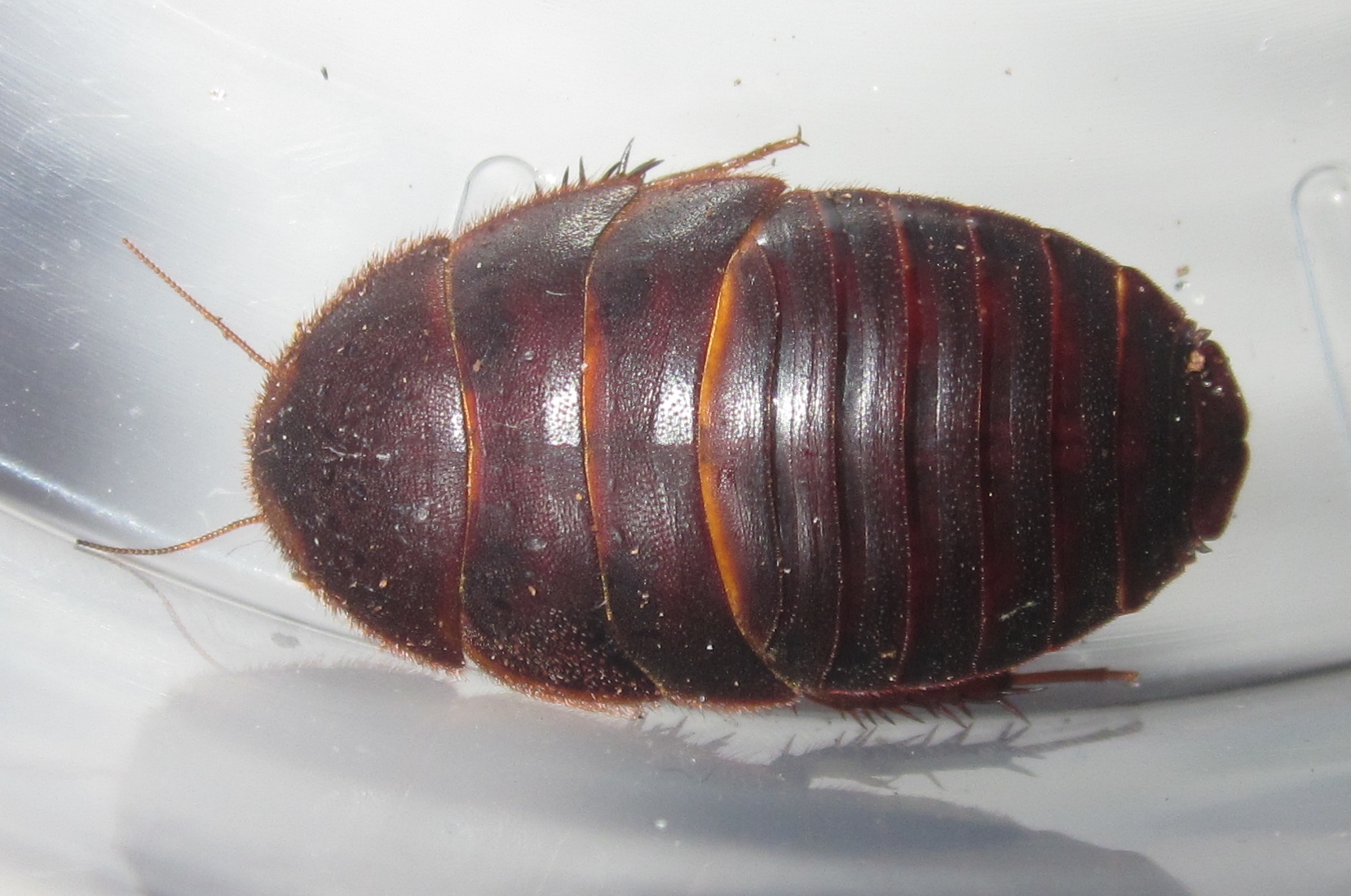
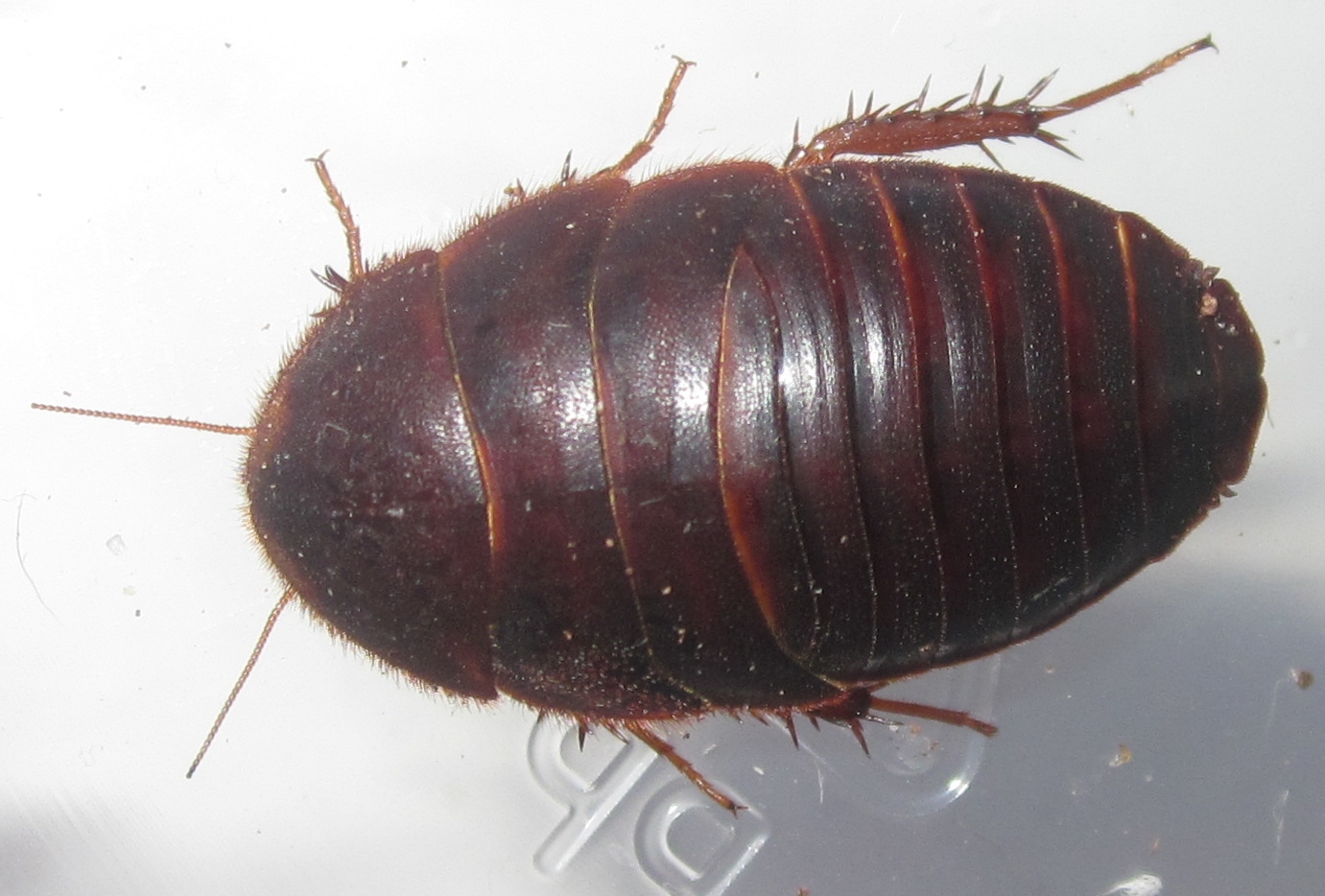
Here are some pics of the females:


Such a pretty species, fingers crossed these females pop some ooths out for me soon! 🤞 😅

Next, I got a starter colony of Plectoptera poeyi "Big Pine Key, FL", the Florida Beetle Mimic roaches! 😁 The ones I sent Brandon last year have bred quite well for him thankfully, he's the only person I sent them to who had success with them. 

Evidently the key to his success is just not having a million springtails get into their 32 oz deli cup, which has a cloth mesh lid. Thankfully he had some of those delis to spare, so I asked him for one along with the starter colony, so I can set them up identically to his. 😅 Hopefully round #2 goes better for me with this species, and I can get them past a couple generations in my care!

I also got a starter colony of the beautiful Panchlora sp. "Costa Rica - Yellow". Just because they were my second favorite Panchlora species to keep (the first being sp. "White"), and they do well for me. Not a ton of people have them ATM so figure it can't hurt to have another colony out there. 😄

I also asked for a couple Deropeltis sp. "Masai Mara" ooths, a species that has done very well for Brandon but I can't hatch for the life of me... Brandon's been keeping his quite humid, and thinks my failure with hatching their ooths in the past has been due to me keeping them too dry. So this time I'm keeping these ooths super humid, but warm and well ventilated too. We'll see if I have any luck this time, if keeping the ooths too dry was my only mistake with this genus, that's gonna be funny and slightly depressing... 🙃😂

Lastly, but perhaps most excitingly, Brandon sent me a new morph project to try and isolate fully: Neostylopyga propinqua (African Bullet roach) "Bloody Bullet".
Brandon's African Bullet roach colony has been throwing out a lot of high red individuals lately, and so he picked out the reddest ones he could find and sent them to me, to try and isolate and further refine the high red coloration on them. The morph name "Bloody Bullet" is super cool IMO, and I hope to do that name justice by isolating out a very red line of this species! 😁

I've got them set up in a moderately ventilated container with a thin layer of coco fiber as the substrate. They've got bark hides, and I'm keeping them fairly humid, at around 75-80F°. I'm offering dog food and fruits as the main diet.

Here are some pictures of a couple nymphs, and a couple adults:

Nymphs


Adults


The nymphs are VERY high red, like, they have much more red coloration than I've ever seen in my old normal colony of this species. And while I used to have a few reddish adults pop up in my normal colony from time to time, these adults of Brandon's have a much redder base coloration, especially on the abdomen, with lighter red blushing extending from the thorax well into the abdomens as well. 

Hopefully I'll be able to get a colony breeding true for this coloration, and perhaps intensify the red coloration on the adults in particular with selective breeding. 😁

Well, that's it for this post, thanks for reading, hope everyone enjoyed, stay safe, stay buggy, and I'll see you all next time! 😉 

Saturday, January 6, 2018

Lanxoblatta Pictures, a Pystalla Update & More Panchlora Babies!

My Lanxoblatta rudis are doing OK, my adult female still hasn't given birth to any nymphs though, and on closer inspection doesn't even look that plump. I fear I'm keeping them too cool. However, the gestation period for this species is supposedly very long, and gravid females apparently don't look that plump anyway, so I'm probably just overreacting.

Anyway, I was able to get some pictures of my adult female the other day in some more natural lighting, here she is:


Will keep you all updated on their progress!

Unfortunately, the deformed Psytalla horrida adult died the other day. I tried tong feeding it live, about to die, or pre-killed prey, and for some reason, despite readily grabbing them with it's normal front leg, it seems completely unable to pierce prey with it's rostrum. The rostrum appeared to be perfectly formed, not blunt or anything, not sure why it couldn't properly stab any sort of prey items. Anyway, this caused it to die of starvation, despite my best efforts.

The other five adults are doing great though, and are eating the Pycnoscelus nigra I offer them regularly! I just took out any uneaten roaches and placed a deli cup with substrate in their main enclosure the other day, will see if they lay any eggs, (I have four females and one male I think, so I they should give me at least a few eggs... 😛).

Lastly my Panchlora sp. "Costa Rica Yellow" colony has produced another litter of nymphs, which is great, I definitely have more than enough offspring to keep the colony going now! 😁

Well, that's going to do it for this post everybody, I hope you all enjoyed, will see you next time! 😉

Wednesday, November 8, 2017

Armadillidium, Anallacta & Panchlora, Oh My!

Pretty sure I made the same pun on a different post title as well, but whatever! 😜

My Armadillidium maculatum "Dalmatian" colony is doing quite well, and I've been doing my best to selectively breed for the most white coloration possible, while still retaining a good amount of grey spots too! I'm pretty sure I've done that now, here are a couple pictures I took of one particularly good looking individual:


Nice, right? I'll take the silence as yes! 😆 Hopefully these will become more widespread in the hobby soon, it's a beautiful strain of an already very attractive species, that every isopod enthusiast should have!

My Anallacta methanoides are maturing like mad, and I have quite a few females now! I should be getting plenty of oothecae soon! 😁

Here are a couple pictures of a mating pair:


Can't wait until I get some oothecae from them!

At least one of my Panchlora sp. "Costa Rica Yellow" females has given birth, there are more than a dozen tiny nymphs crawling around the enclosure now! 😊 I am quite relieved, as I was beginning to doubt if they would ever give birth, after their substrate was infected with a nasty fungus a month or two ago. Things are definitely looking up though, which is great! No pictures of the little nymphs unfortunately, they are just too small right now.

I finally moved all of my Panchlora sp. "White" to a medium sized enclosure, with plenty of bark, dead leaves, and New Zealand sphagnum moss for hides. There are three areas where I place food in the cage, so the adults are always sure to find some, let's hope they like it! Unfortunately the enclosure did get inoculated with Sinella curviseta accidentally, so now I have to keep my eye on them and make sure their numbers don't get out of control...

Also, while moving my old female and her nymphs to this new enclosure, I discovered that she actually gave birth to a good sized litter, a dozen or more nymphs! I thought she only produced half that much, so this was quite a pleasant surprise! 😄

Here are some pictures of the enclosure:


The adults seem to spend most of their time on the sides of the enclosure, which is a bit concerning to me, but apparently not unusual for Panchlora. They don't seem stressed, trying to escape or anything, they just like resting on the sides of the enclosure. I might redo the enclosure later and prop some bark slabs up vertically, maybe they just don't like resting on a horizontal surface?

Anyway, that is gonna be it for this post, I hope everyone enjoyed, will see you all soon! 😉

Sunday, July 30, 2017

Drymaplaneta & Panchlora Updates!

I am happy to announce that all of my Drymaplaneta semivitta have matured! 😊 (with the exception of one small stunted nymph that is way behind all my other individuals in terms of growth). I have three females, and surprisingly, two males! I thought I only had one male left, but it seems I was wrong!

The adult males in particular are very cool looking, because while the females have normal hind legs, the males have legs with large, flattened areas on them, which almost makes them look like they are wearing boots or something! 

For example, here are some pictures of one of my males:


As you can see, the hind legs are quite unusual looking! Anyway, now that my males are mature, the females should start laying some fertile oothecae soon, which is great! BTW, I still have not added any substrate to the enclosure yet, I have some substrate that I am preparing for them right now, next week it should be completely bone dry!

My male Panchlora sp. "White" nymphs are starting to mature now, and my largest female should also mature really soon! I never realized just how big this species was for a Panchlora until I got some of the other species, the males alone are giant compared to those of Panchlora sp. "Speckled" or "Costa Rica Yellow" for example!

Here are some pictures of a couple of my males:


This species is so freaking beautiful, here's hoping I'll be able to get another generation going! 😀

My Panchlora sp. "Costa Rica Yellow" are finally starting to mature, I've got adults of both sexes now. They are very pretty looking, and a lot brighter in person than in most photos I've seen!

Here are pictures of my largest female:


With any luck, I should have offspring from this species soon, I am very glad I got a group of these, they are a lot better looking than I thought they would be! 😄

Anyway, that's gonna be it for this post, I hope everyone enjoyed, will see you all soon! 😉