Showing posts with label Gromphadorhini sp. "Black". Show all posts

Sunday, November 23, 2025

Cryptocercus, Hissers & More!

I just received a group of Cryptocercus clevelandi, from near the Oregon Caves National Monument Area, OR (they were not collected from the Monument AFAIK, that's just the nearest landmark around where they were collected from that I can use as a locality info marker). These are the only Cryptocercus species from the West Coast, and are supposedly larger than any of the East Coast spp., however the ones I recieved are about the same size as C.garciai (though these were not only captive reared, but the large clevelandi individuals I have may only be subadults; it's hard to tell).

This time for Cryptocercus I'm not messing around with man-made substrates for them, I'm just using straight, crushed brown rot wood, since this seems to be all they eat in the wild. I've got them in a well ventilated 5 gallon bin filled to the brim with said wood, which I'm keeping moist. I highly suspect a cool period during the winter is required for inducing reproduction in this genus, and the native habitat of this species certainly gets quite cold during the winter (about as cold as it gets here in Idaho), so I have their bin in my garage and will keep it there until February.


Here's hoping they will not only survive long term for me, but will breed as well, that'd be fantastic!

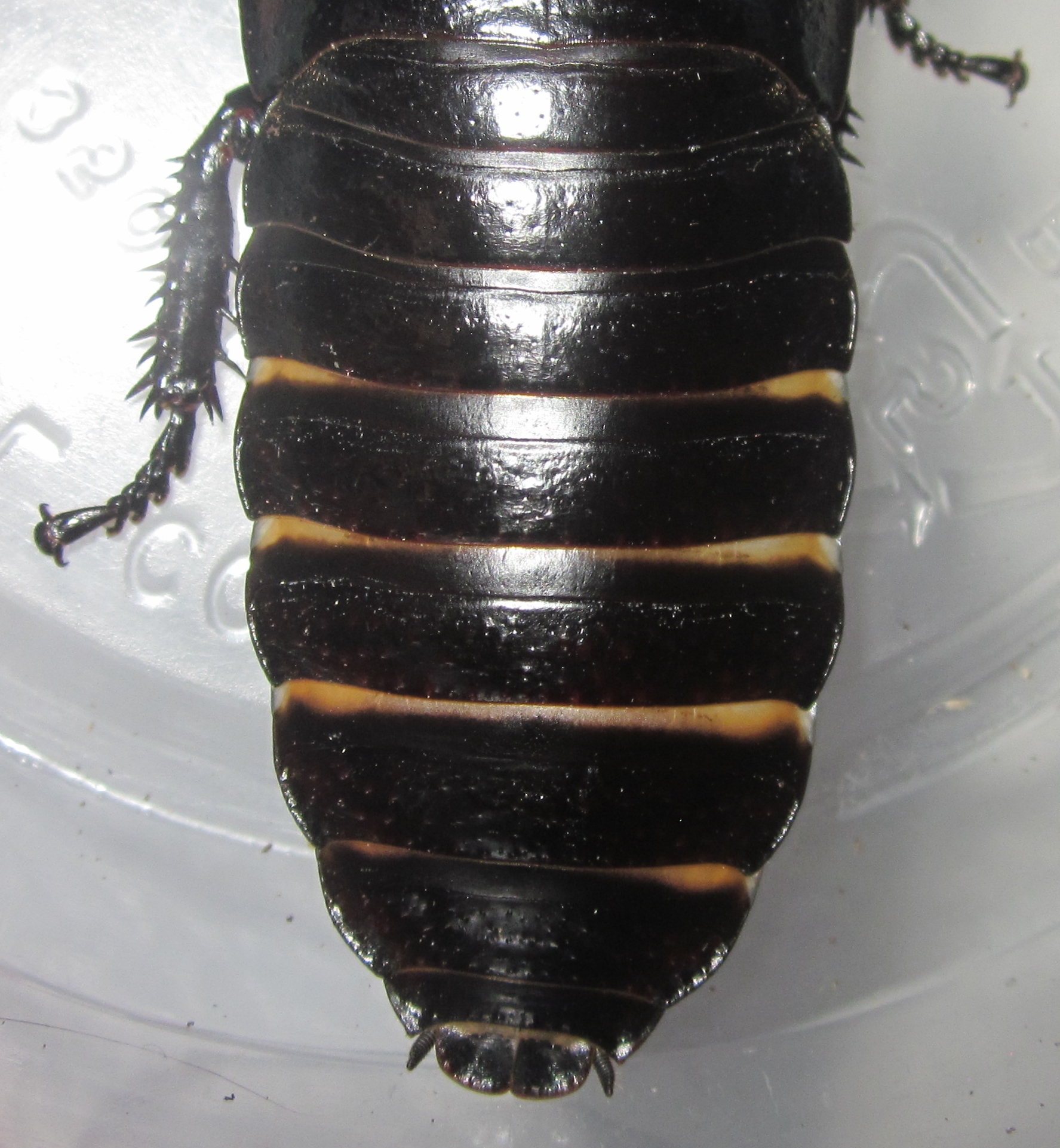
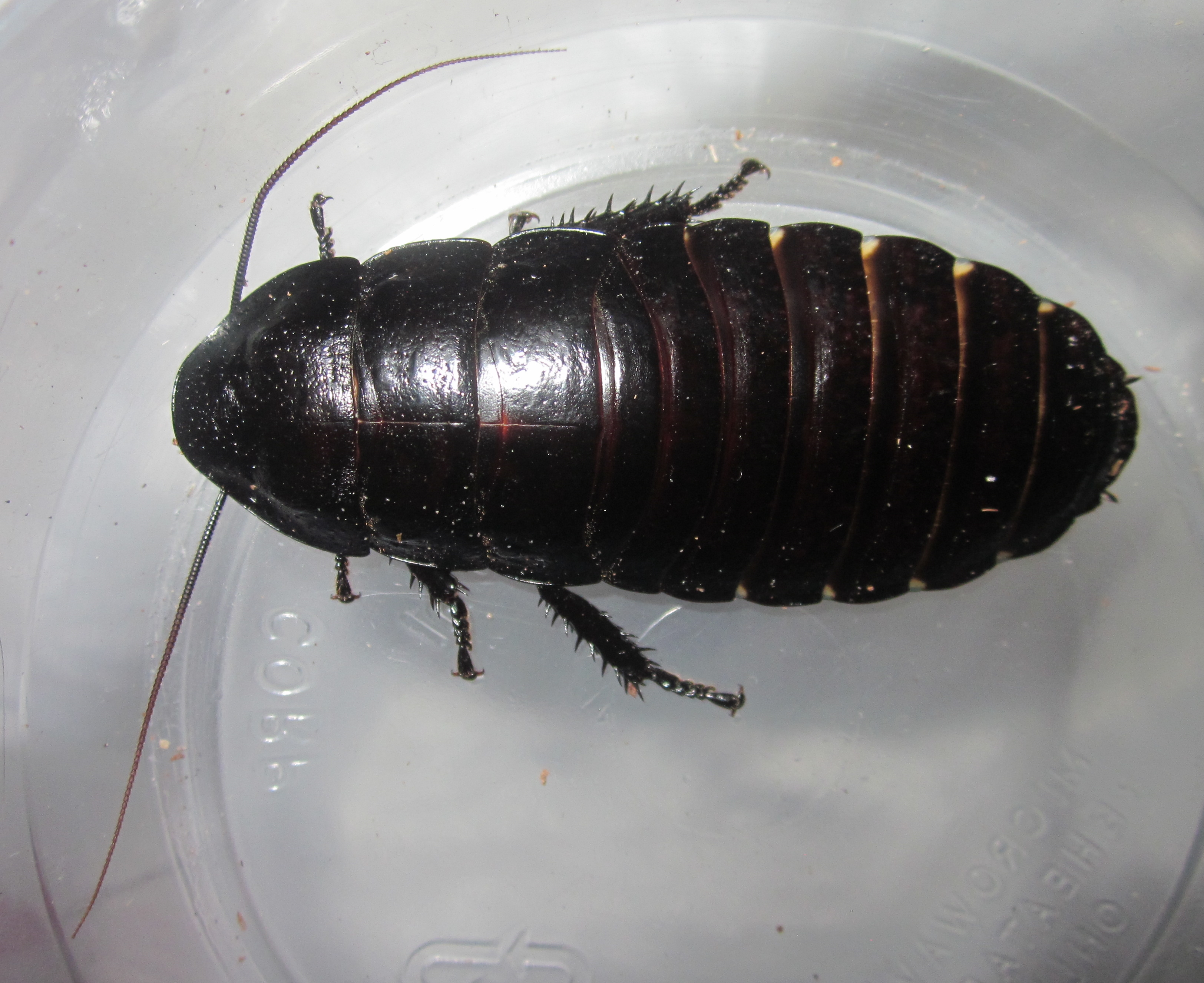
My Gromphadorhini sp. "Black" (ex. "Black Tigers") are doing very well, and threw out several very large major males this generation! They are really most reminiscent of G.portentosa in terms of morphology, but still look different than any of the other pure portentosa stocks in culture IMO...


In interesting news regarding this strain, one keeper, Derek Pitts, who's had their colony for years, and never added other bloodlines to their culture, is having "normal", brown/orange individuals pop up in their culture... so they're reverting for him back to their wild type coloration. This is not unheard of as far as morphs go, and provides us with a valuable opportunity to see what these came from; evidently either an old pure line of G.portentosa, or very portentosa-like mutts.


It will be interesting to see what, if anything, comes from these reverts... At the very least, definitely shows why we shouldn't be calling these "Tigers" of any sort!

My Porcellio expansus "Witch's Potion" are doing great, slowly but surely growing in numbers, and adjusting to a recent enclosure upgrade well! Unfortunately the same can not be said for my "White Skirt" line of expansus, those crashed completely after an enclosure upgrade, and I'm still not 100% sure why. But looks like I'll be having to find more of those soon...


At least I still got these beauties, really hope they explode in population this coming generation! 🤞 
!

I have finally built up a nice population of Pseudoglomeris magnifica "Kunming, Yunnan, China", and now that they've hit an all time peak in numbers, I am going to attempt to break their diapause this Winter... 😅 Hopefully it goes smoothly, with the numbers I have I think I should be fine, and that should account for mild die offs/reduced reproduction that occurs this winter from the lack of diapause.


I just found a female carrying fresh babies this week, so so far, so good! 😄

Lastly, my Agabiformius cf. lentus "Trastevere" are doing very well, and I got some decent pictures of a group of them recently, which I figured I'd share here.


Really love these little cuties, they're so dang chonky! 😊

Anyways, that does it for this post, thanks for reading, hope everyone enjoyed, and I'll see you all next time! 😉 

Saturday, June 18, 2022

"Black Tiger" Hissers are NOT "Tigers"

Well, the "Black Tiger" hissers I got from Ty Dye Exotics, who got theirs directly from Roachcrossing have finally started maturing... And yeah these are definitely NOT real "Tigers"... Or at the very least are a cross between Tiger hissers and portentosa. The pronotum structure of the adult males have all matched G.portentosa or "portentosa" mutts, and completely lack the anterior notch that true "Tigers" and all other P.vanwaerebeki strains have.

Here are some pictures of the pronotums of the two spp. to demonstrate what I mean:

Large male "Tiger" hisser. Noticeable anterior notch in the pronotum.
Medium/Small "Tiger" male. Still a noticeable anterior pronotum notch.

Minor male "Tiger". Much more shallow anterior notch on this one, but you can still see it.
Now take this medium male "Black Tiger"... No anterior pronotum notch whatsoever.

Clearly an obvious difference between the two. If these "Black Tigers" were truly a black morph of the pure "Tiger" stock, they'd have the anterior pronotum notch. Since they don't, they're definitely not pure "Tigers", and therefore should NOT be referred to as "Black Tigers" at all, the only morph name should be "Black" or "Black Hybrid". 

As for what species they really are, I'm not 100% sure. Technically they could just be pure, black G.portentosa, however considering we have no way to lineage trace these back to their origins, and the isolator is relatively unknown in the hobby, it's far safer to conclude that they're a hybrid, probably some "portentosa" mutt. Perhaps they are portentosa crossed with "Tigers" that reverted to portentosa morphology, which would explain the "Black Tiger" name a bit more.

When it comes to labeling them from here on out, rather than call them Gromphadorhina grandidieri "Black Tiger" (which is already an erroneous identification for the true "Tiger" stock) or Princisia vanwaerebeki "Black Tiger" (which they're not, since they're not *pure* "Tigers"), they should be called Gromphadorhini sp. "Black" or "Black Hybrid". Gromphadorhini because they're probably a hybrid, and could potentially be a hybrid between Gromphadorhina and Princisia. If/when those genera are synonymized then we can just call them Gromphadorhina sp. "Black/Hybrid", but for now Gromphadorhini would be the most accurate IMO.

Anyways, here are some pictures of one of my adult pairs:

Adult male


Adult female 


Don't get me wrong, these are very pretty hissers, line bred for beautiful and consistent coloration, but they are almost certainly hybrids, and should be labeled as such. They should NOT be labeled as "Black Tigers" anymore, and since this stock seems to be the oldest, most widespread "Black Tiger" strain on the market, the findings of this post should be applicable to ALL "Black Tigers" in the hobby... 
So, TLDR; Ditch the "Tiger" in "Black Tiger" people, otherwise the name literally makes NO SENSE. And don't be selling them under species names either, they're almost certainly hybrids, Gromphadorhini is as far as you can legitimately go when using latin names for this stock!

Thank you all for reading, hope everyone found this informative, stay safe, stay buggy, and I'll see you all next time! 😉