Showing posts with label Nyctibora sp. "Peña Blanca Lake - AZ". Show all posts

Sunday, April 12, 2026

Nyctibora Ooth, Blue Beebles, Striped Roaches & More!

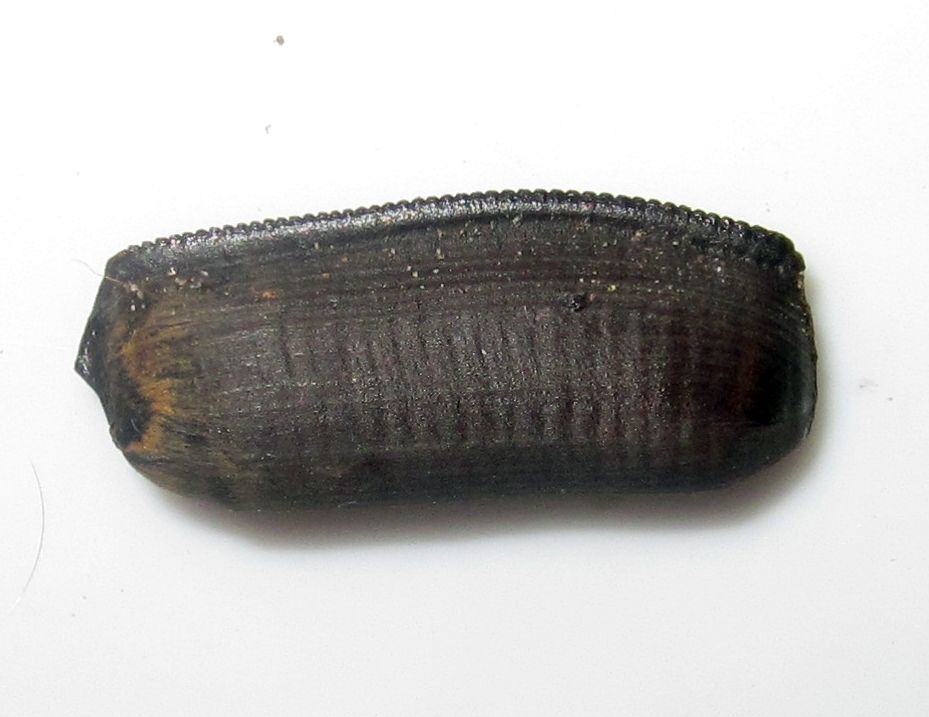
Second time's the charm! 😆 A friend of mine sent me a mystery ootheca from Peña Blanca Lake, AZ, which, after examining in person, appears to be an ooth from the unidentified Nyctibora that are known from that locality. My last attempt at incubating oothecae of this species failed, likely due to me keeping them too dry, and due to the less than optimal heating methods I was employing at the time.

From what we've learned about incubating Nyctibora since then, it seems that their ooths prefer consistently high moisture and humidity, and don't even necessarily need much ventilation. This is pretty different from incubating oothecae of the more arboreal Nyctiboridae like Rochaina for example, but seems normal for Nyctiborids that lay their oothecae closer to the ground (or under it) like Nyctibora and Megaloblatta spp..

So, I have this ooth in a poorly ventilated deli cup with a thin layer of coco fiber substrate. The ooth is partially buried in the substrate, which I'm keeping moist. It's being kept at around 80-85F°, and based on what we know about incubating other Nyctibora spp., the incubation time should be around 6 months from when it was laid. Since this is a WC ooth, I have no idea when it was laid, so I could be waiting anywhere from 1-6 months. 😅


Here's hoping for a successful incubation, so that I can not only establish this species in the hobby, but so that I might actually identify them (I have suspicions it is one of two brachyapterous Nyctibora native to Central America, however I need to see an adult male to tell which it is).

My Triorophus sp. "Ector County, TX" have established themselves nicely, to the point where I can finally start offering them up for sale alongside the sp. "Ft. Stockton, TX". 😄 I'm pretty sure the two lines are the same species TBH, as the localities are quite close, however I can't know for sure without having an expert examine them.


I really love this genus, they are by far the easiest of the psammophile Tenebs I've ever worked with.

I don't believe I've ever posted about these before, but Summer 2024 I got some Byrsotria cabrerai from my buddy Brandon Maines, which have bred for me, but quite sparingly this whole time. Only now after a recent rehouse am I starting to get more regular reproduction from them, it seems this species wants consistently high air humidity, which for me is easiest to provide them by giving them only minimal ventilation. 

I have them set up in a 2 gallon or so, minimally ventilated tub with a couple inches of coco fiber substrate, with some coco coir chunks and leaf litter mixed in. I'm keeping them humid, at around 80-85F°, and am feeding them dog food and apple slices.

Female


Male


Pair

These are a pretty colorful Byrsotria species, and I am glad to see some more consistent reproduction from them! Here's hoping I'll have a big colony established soon! 🤞 

Late last year I rehoused my Asiopus minimus "Gulf Shores, AL" to a fresh setup after they suffered a crash, seemingly due to a severe infestation of both Pyralis farinalis and Alphitobius diaperinus. Unfortunately despite my best efforts I was unable to save the Asiopus, and even after moved to a fresh setup they failed to breed and died off... 

However, while digging around in their bin, I noticed that they were not the only species that established itself in there from Gulf Shores... evidently some Blapstinus fortis were also mixed in with the Asiopus, that I must have either missed or failed to recognize as a different species. There were far fewer of them in there than the Asiopus, maybe 6-8 individuals compared to the 30 or so Asiopus. So I chucked the B.fortis into my Gromphadorhina portentosa "1972 Cleveland Aquarium" bin, since I find micro darklings do well with hissers, as sort of a "Hail Mary".
Lo and behold, they bred and established themselves very nicely in that bin, and I now have another Blapstinus to add to my collection! 😄 These are pretty large for Blapstinus and a bit more rectangular in shape than most of the other members of the genus I've worked with.


I'm glad I was able to salvage these from the Asiopus minimus colony and establish a culture of them, quite unfortunate that the A.minimus failed but alas, that's just the way things go sometimes.

Last but not least, after my old culture of Porcellio expanus "White - Skirt" crashed due to a number of factors, Tennyson Kingsley was kind enough to trade me some back. 😄 These are also originally from Alan's stock, so same exact line thankfully.

This time I have them set up in a well ventilated 2-3 gallon bin with a thin layer of coco fiber and sand substrate (leftover substrate from a darkling beetle setup IIRC), topped with coco coir chunks, leaf litter and lots of bark. I'm keeping a third of the enclosure humid, the rest dry, and I'm keeping them at around 73-75F°. Whether it's the larger setup or cooler temps (both of which I'm finding are important for this species), they are thriving and breeding in a way my older colony never did, so seems I got their conditions figured out well now!


So glad these are thriving for me now in the way that the "Orange Skirt" line has, now I just need my "Witch's Potion" and "Autumnal Equinox" colonies to catch up to this level of productivity... 👀 😄

Anyways, that's gonna do it for this post, thanks for reading, hope everyone enjoyed, and I'll see you all next time! 😉 

Thursday, September 28, 2023

More "Meh" Updates

As always, there's gonna be ups and downs with this hobby, and while I still have many new additions to my collection and breeding successes that I'm behind on covering, I feel it's time to get some more morose updates out of the way before I forget them and they get lost in the hustle and bustle.

First off, I've completely failed at rearing Ammopelmatus mescaleroensis. My male ended up having a horsehair worm, so Alan was kind enough to send me another pair. Sadly the male he sent mis-molted in transit and died shortly afterwards... and then both my female nymphs died before they could even mature. I'm not really sure why the females died, it may have been due to the consistency of the sand I used not being to their liking, or I kept them too humid (but if I kept them any drier the sand would be completely loose and they wouldn't able to make stable burrows and resting/molting chambers). In any case, I'm pretty much done with Jerusalem crickets for the time being, that group is just so damn finicky and difficult to breed with any consistency. I'm sure it's possible, but I'm also sure that it's not nearly worth the effort for me personally. Perhaps if I could ever acquire one of the winged Central American Stenopelmatus spp., or the Tropical Asian Sia spp., I'd consider giving the group another try, but as for Ammopelmatus, I'm done.

Next up, some Metallyticus woes. After painstakingly power-feeding my lone female M.splendidus nymph (BY HAND, because for some f**king reason these things won't eat anything on their own for me), she finally matured... and mismolted in doing so. 🤬 Of course, both my males matured perfectly with no defects, but in the same exact setup, my female came out with one of her front raptorial legs bent, and crumpled up, matte textured wings to boot. 🙃 The latter is merely an eyesore, nothing more, but the bent front raptorial leg has been a big pain. Thankfully she broke/chewed the bent part off, so she can move normally now, but that leg is now shorter and not very effective for holding prey... which not only means I absolutely have to hand feed her, BUT she can't hold her food properly and keeps dropping it.

To make matters worse, my males died not that long after she matured, and I'm not even sure she was ready to mate... thankfully my buddy Brandon had an adult male and a subadult male to spare (his "breeding" group he got at the same time I did all ended up being males), so that problem should be taken care of at least. Now it's just a matter of getting the female to actually eat and gain some substantial weight, which she has been reluctant to do so...

Of all of the annoying, PIA inverts I've worked with, these are one of the worst, but I am SO determined for this work to pay off and pay for itself. I'm not in this hobby for the money, but goddammit I'm gonna get my money's worth from these f*ckers if it's the last thing I do, whether that be in money, trade value, or a sense of personal achievement having bred this rare mantis species.

I sadly made a grave error with my Microtomus purcis hatchlings, and tried keeping them all communally... the larger nymphs and adults got along fine, but I found out too late that the small nymphs are very cannibalistic. I only have two nymphs now, there may still be some unhatched eggs, and my last remaining, old adult female might lay some more, but my hopes are not high for recovering this culture due to my stupid mistake... however TBH I'm figuring out that I kinda hate keeping most predatory inverts, regardless of whether they are communal or not, so this isn't a huge loss for me as I'm probably not going to be keeping inverts like these much in the future anyways. I always end up getting bored with my predators, it's just not my forte.

Sadly, my Rochaina peruana ooth and my two Nyctibora sp. "Peña Blanca Lake" ooths have all died and rotted... not really sure what I could have done differently TBH, I thought the humidity and ventilation levels were fine, the Rochaina ooth may have been DOA to be honest considering it was shipped in the winter, but the Nyctibora were definitely viable on arrival. All hope seems lost for Rochaina in captivity ATM, we'll see if Kyle can hatch his Nyctibora ooths though... Definitely a big bummer for me, and not even much of a learning experience. 

I'm pretty sure I've completely failed with Thorax porcellana. My adults are all old now, and my females just kept aborting every single ooth they made. I've tried keeping them dry, humid, well ventilated, poorly ventilated, basically every damn combination I could think of, to no avail. Pretty upset about this since again, I have no idea what I'm doing wrong, and these are some of the neatest roaches in the hobby, which I was very excited to work with. THANKFULLY both Brandon and Junior have been quite successful with breeding theirs, so this species will be spread around in the US hobby, which is the most important thing... but I am quite sad I was unable to breed this species as well.

Lastly, I've had huge die offs in my Blaberus cf. chacoensis colony as of late... I did not realize this species needed vertically slanted surfaces to hang from in order to molt to adulthood properly, many of the more heavily burrowing Blaberus spp. don't.... but that's not the case with these, so the vast majority of my colony reached subadult stage, mismolted to maturity and died. 😣 Several males molted successfully regardless, but then seemed to have harassed and killed the few females that also matured successfully shortly after they molted... so to sum things up, I have three adult males, and ONE subadult female.
I removed the males from the setup and added bark hides, which the female nymph is already clinging to. So, she'll probably mature successfully, and after she's been mature for a little while I'll introduce a single male to her... and then I'll be right back at square one, where I was a year ago with this species. 🙃 Sucks to have made no notable progress in establishing a healthy colony after all this time, but at least I was able to send some off to a couple friends over the past several months, so it hasn't been a complete waste of effort.

I think that's it for this bummer of a post, at least, that's everything I can remember for now. 😆 Thanks for reading, hope at least some of this post was informative (even though the majority of failures in this post were due to unknown reasons), and I'll see you all next time.

Sunday, October 30, 2022

New Record of Nyctibora from Arizona!!!

This is a pretty exiting post, as we'll be talking about a recent discovery made by Benjamin Senigaglia (the same person who introduced Arenivaga sp. "Mount Ord" to the hobby). While looking for bugs around Peña Blanca Lake in Arizona, Benjamin found some interesting looking roaches, both females, which he thankfully captured and photographed. After the pictures got around to Alan, Kyle and I, we determined they were most likely a species of Nyctibora, a genus that until now had NEVER been recorded in the US before! 😲

I did some further research, and it would appear that there are two Nyctibora species in Mexico that could conceivably range north into Arizona, namely N.truncata and N.tetrasticta. The two are very similar, and can only reliably be told apart by looking at adult males; male truncata are all black, whereas male tetrasticta have reddish brown spots on either side of their 5th and 6th abdominal tergites. Benjamin only found females though, so we won't know for sure what species these are until we get offspring and rear some males to adulthood. Still, a very exciting development, these Nyctibora would appear to represent a previously unknown, native US population, and are probably the northernmost ranging Nyctibora species, period. 😃

Nyctibora are typically dark brown or black, velvety Ectobiid roaches in the subfamily Nyctiborinae, which also includes popular genera such as Megaloblatta, Eushelfordia and Paratropes (now Rochiana). This subfamily is notoriously difficult to culture, mainly because their oothecae usually take 6-14 months to incubate (depending on the species), and can be prone to rotting if they stay too humid (but can't be kept dry either). Only in the last few years have hobbyists around the globe been having success breeding some members of this subfamily, and now I get to try out with what's probably the ONLY US native species! 😁 That's right, Benjamin sent both the females he collected off to Kyle, however before doing so, the females laid a couple ooths in his care, which he told Kyle to pass onto me.

I've just gotten the two oothecae from Kyle, and have placed them in a well ventilated, 32 oz deli cup, with a thin layer of moist coconut fiber at the bottom, I've got a layer of crumpled up paper towels on top of that, which is what the ooths are on. I'm aiming for high air humidity, and low surface humidity for them. If it looks like they're shriveling at all though, I'll increase humidity and maybe place them on the substrate. Keeping them at around 77-85F°.

Here are some pictures Benjamin let me use of the adult females he collected, plus some of my own pics of their unique looking ooths:

Adult female ©Benjamin Senigaglia
Adult female, ventral abdomen ©Benjamin Senigaglia
Oothecae


Such a neat species, really looking forward to seeing babies at some point, fingers crossed! 🤞😁

Well, that's gonna do it for this post, thanks for reading, hope everyone enjoyed, stay safe, and I'll see you all next time! 😉