Showing posts with label Plectoptera poeyi. Show all posts

Wednesday, August 30, 2023

Random Updates & New Bugs

My Yuukianura aphoruroides are doing swimmingly, despite the culture being contaminated with predatory mites and Poduromorpha sp. "Tiny Blue". The predatory mites seem not to be interested in the Yuukianaria, at least not enough to make a dent in their population. And the Poduromorpha also seem not to bother the Yuukianura, instead eating the more rotten foods that the Yuukianura already tend to ignore. So, the culture is thriving, and I've already set up another cup as a backup colony. 😃

Here are a couple crappy pics of a group swarming some food, along with lots of the sp. "Tiny Blue":


Such cute and vibrantly colored springtails, I'd like to get the Thailand Reds as well one day soon.

The Liposcelis sp. "TDE" I've isolated are breeding well, seems a very easy species to culture.

Finally got some pictures of them... though you can barely see the dang things. These are the best quality photos I could get of them, they're so fast and so tiny:


Definitely some neat little inverts, with good cleaner crew potential for drier setups.

Now for some rapidfire bad news... Unfortunately I killed all my Goliathus goliatus, they all made pupal cells, and one even made it to adulthood, but I kept them just a tad too humid during this stage, and that resulted in all of them dying as prepupal larvae, pupae, and even killed my one teneral adult. 😭  Apparently they don't tolerate excess humidity well at all, but I found it difficult to get their substrate to a properly compactable level without keeping it as humid as I did, semi-humid is a very difficult humidity level for me to maintain personally here in the high desert environment I live in. So, that's quite a bummer. I did snap some pics of my teneral adult through the hole I poked it's pupal cell, before it passed away, which I'll share here: 


Now for news that's perhaps even more frustrating, I accidentally killed my Titanophilus sp. "Colombia" by smashing part of her under the one piece of bark in her enclosure. 😟 This is particularly upsetting, since besides myself, literally only one other person keeps this species, AND she was doing fantastic for me up until this point (granted, she definitely wasn't mated, so I still needed to get a male from my buddy who's still got a small culture going before I had any hope of breeding this species). I'm quite angry at myself about this blunder, and in the future, should I ever acquire this species again, I will never use bark as a hide for them.

Unfortunately I've lost my cultures of Plectoptera poeyi, Margattea cf. bisignata, and Chorisoneura parishi. Thankfully, Kyle at Roachcrossing has a healthy colony of the former two, and should be able to send some back to me later this Fall. However, I don't know of anyone who has a good culture of the Chorisoneura... so those may be lost from culture now. 😞 

I just did a trade with my friend Junkai Wang, and now finally have TRUE Hemiblabera tenebricosa "Monroe County, FL". 😃 In case any of you aren't up to speed, the old hobby "tenebricosa" stock isn't actually tenebricosa, but is more likely H.roseni. The difference between those and these true H.tenebricosa are pretty obvious, and are outlined in my post about the issue here.

Care for these is pretty simple, I've got mine in a moderately ventilated setup with a couple inches of coco coir substrate topped with leaf litter, which I'm keeping humid.

Here are some pictures of the nymphs:


They're pretty colorful for Hemiblabera nymphs, really looking forward to seeing some adults!

I also got some Chalcolepidius smaragdinus from Kai, which were actually the main point of the trade. However, while he did mention they were damaged from being housed communally (this genus is quite territorial and adults will bite each other's legs off if kept communally, or at least particularly crowded), I was not prepared for just how bad they messed each other up. Simply moving from one end of the enclosure to another is a struggle for the 6 adults he sent me (1 male, 5 females), and most of their legs have been reduced to little stumps.

I wasn't sure I'd be able to get any eggs out of them whatsoever in their current state, it's a challenge even with perfectly mobile adults, as they seem rather picky about their oviposition spots. However, I just found two eggs in one of their setups the other day. Two eggs out of 5 females is pretty abysmal, but it's much better than nothing, which is honestly what I expected. So if I can get a total of 8-10 eggs somehow, then I'd honestly be stoked, as that would give me a breedable group to work with, and then i can try and do better with the next generation of CB adults. 🤞 

Even as damaged as their limbs are, they're still quite photogenic, so here are some pictures of the adults:


Such a beautiful species, would be amazing to get some larvae from them, so I've got my fingers crossed! 🤞

Also, big thanks to Ty from Ty Dye Exotics, he just sent me some Bantua robusta and Arenivaga sp. "Mt Ord", both of which I needed to restart my cultures of. 

Anways, that does it for this post, thanks for reading, hope everyone enjoyed, and I'll see you all next time! 😉 

Friday, November 25, 2022

Meh, Who Needs a Title? Just Some More Updates...

Got some updates and pictures to share! 🙂

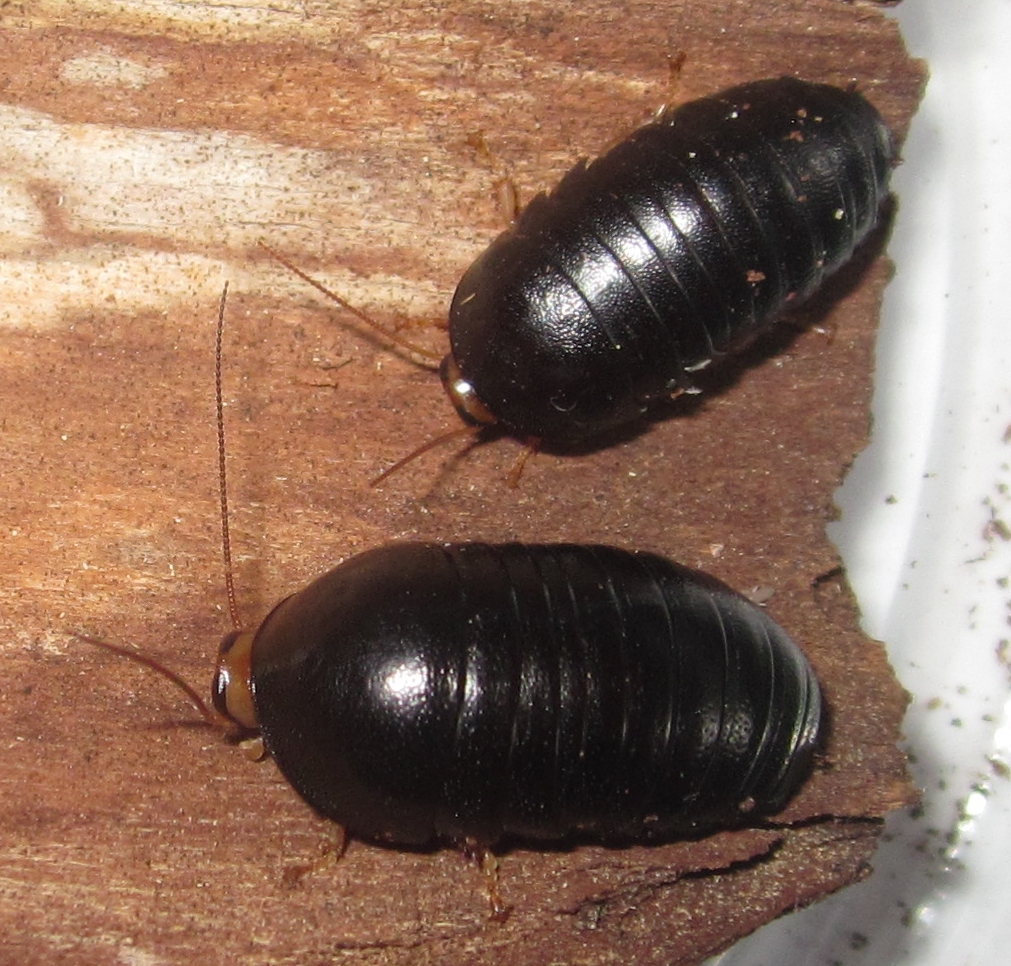
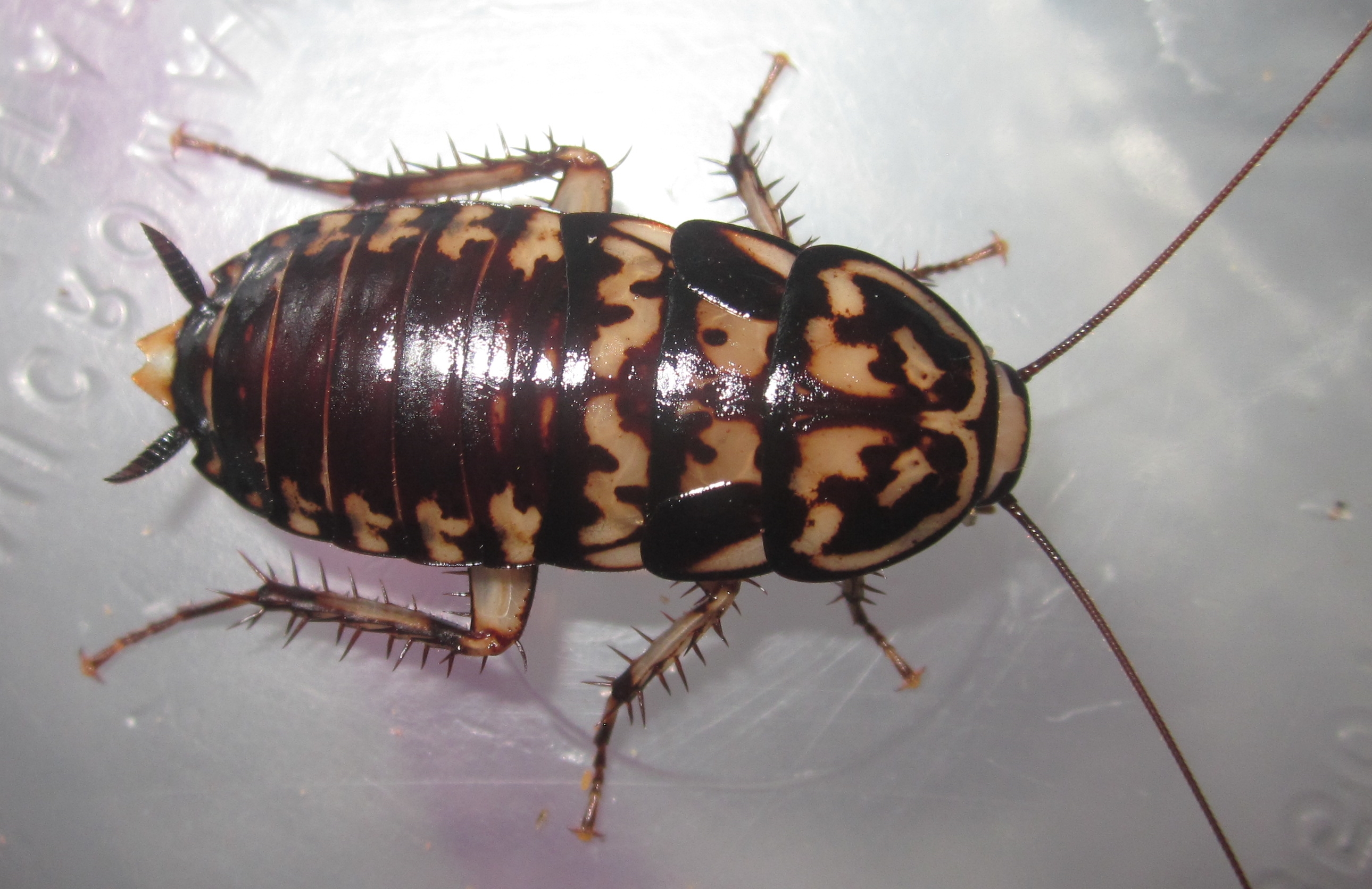
First off, my Plectoptera poeyi are popping off, there's so many in my culture, and they've  completely destroyed any and A LOT of new adults! 😁

Here are some pictures I took of a group of them recently:


Such a cute species, hopefully more people will culture them in the future!

Next up, decided to take some better comparison shot of adult females of Perisphaerus punctatus and Perisphaerus pygmaeus. I had taken comparison pictures between the two species when I first got punctatus, and I honestly quite like my male comparison photo. However, the young adult female punctatus in those pictures weren't well fed/gravid yet, and so had shrunken abdomens, compared to the normally quite plump abdomens of well fed/gravid females. Also didn't really get good dorsal shots of the female punctatus alongside the pygmaeus...

So I took better pics comparing the two the other day, here they are (the pygmaeus is the smaller of the two in all these pics, the punctatus the larger, in case that wasn't clear):


Solo shot of female pygmaeus, just 'cause.
As you can see, the punctatus are noticeably larger than pygmaeus (though this wasn't the largest pygmaeus female I've seen, some can get a little bit bigger, but this is fairly representative of average size).

On a side note though, I apparently never posted about it here on the blog, buuuut I'm pretty sure based my previous experience with this species, that Perisphaerus pygmaeus (at least the Taiwanese strain in the hobby) needs a winter diapause for optimal breeding.

You see, I did some detective work, and according to INaturalist, there are sightings of P.pygmaeus all over Taiwan. The most sightings seem to be concentrated in a cluster around the capital of Taiwan, Taipei, with just three sightings scattered across the rest of the island, see here:


And realistically speaking, considering Taipei is the capital of Taiwan, with the highest amount of people living there, I'm sure most roaches coming from Taiwan (especially back in the day) probably were collected in the northern half of the island, not the south. In Taipei, the winter temperatures drop to the mid 50s to mid 60s F°, same as some parts of temperate mainland China, so much like the temperate Chinese Pseudoglomeris spp. in culture, I THINK Perisphaerus pygmaeus might actually prefer a winter diapause.

This may be why they have bred so poorly for US keepers long term in the past, but do well for EU breeders, because several EU breeders (at least some of the ones I talk to) often don't provide a ton of supplemental heat to their colonies during the winter, except for very special species, so their collections can drop to the mid 60s F° during the dead of winter, (at least during the night) as a result. It's not super cold, but most of these temperate Perisphaerinae really do only need mild cool periods, followed by a temperature rise in the Spring/Summer to thrive. Some people may still be able to push colonies through multiple generations by not providing a diapause, but it's evidently a lot more difficult...

So, I put them into a diapause starting in the first week or so of October, in the low to mid 60s F°, and I plan to keep them in diapause until about mid December. Not going to give them quite as long as a diapause as my temperate Chinese species, mostly because I think it's unnecessary considering the founders of this colony that I got only went through a short diapause (they were shipped to me in early October, and took till mid November to arrive, exposed to rather cool/cold temperatures the whole time... 😅), and started breeding rapidly after I got them and started keeping them warm. So I'm basically mimicking that timeline, and then giving them an extra week or two in the cold before warming them up again. Hopefully this will trigger the majority of my females to give birth, we shall see! 🤞😊

Lastly, my Porcellionides sp. "Big Pine Key, FL" have been thriving for me, for me they seem to much prefer more humid conditions, I never found them on their dry side, they'd always be clustered in their humid corner. So I started keeping most of the enclosure humid, and they started breeding much better, and can be found throughout much of the enclosure now (except for the corner I still keep dry). High ventilation still seems to be rather important for them though, I don't think they'll do well in humid but poorly ventilated conditions at all (again, similar to some Spanish Porcellio spp.).

One thing I REALLY love about this species is their polymorphic patterning. But that's not all, unlike most other isopods, their patterning actually can affect their leg color too! I'm finding that lots of my high yellow adults also have bright yellow patches on their legs, often the entire legs are actually yellow! But only on some of the legs, not all of them. This is really neat, because USUALLY, no matter the species or morph, the legs of isopods remain a pale grey/white color, with few exceptions. But in this (likely undescribed) species, even the legs can exhibit some bright colors. 😁

Here's a prime example:


This species is criminally underrated in the hobby IMO, not only are they BEAUTIFUL, and still uncommon in culture (two things most avid isopod collectors drool over in a species), but their wild population is very small and actually took a big loss when their small habitat was hit by a fire recently... They're apparently recovering slowly, which is good, however with their natural habitat being more and more encroached on by human development as time passes, it's pretty important these remain in culture via captive breeding, so that they're not lost forever should the worst happen. So honestly, I think they should be way more popular in the hobby than they are. Sure they're US native, not exotic like the popular Cubaris/Merulanella/Nesodillo spp., but it's not like most people can take a little roadtrip and find them easily (nor SHOULD they considering the status of their only known wild population).

Anyways, that does it for this post, thanks for reading, hope everyone enjoyed, stay safe, and I'll see you all next time! 😉

Sunday, July 31, 2022

Adult Harlequins, Baby Symploce & More!

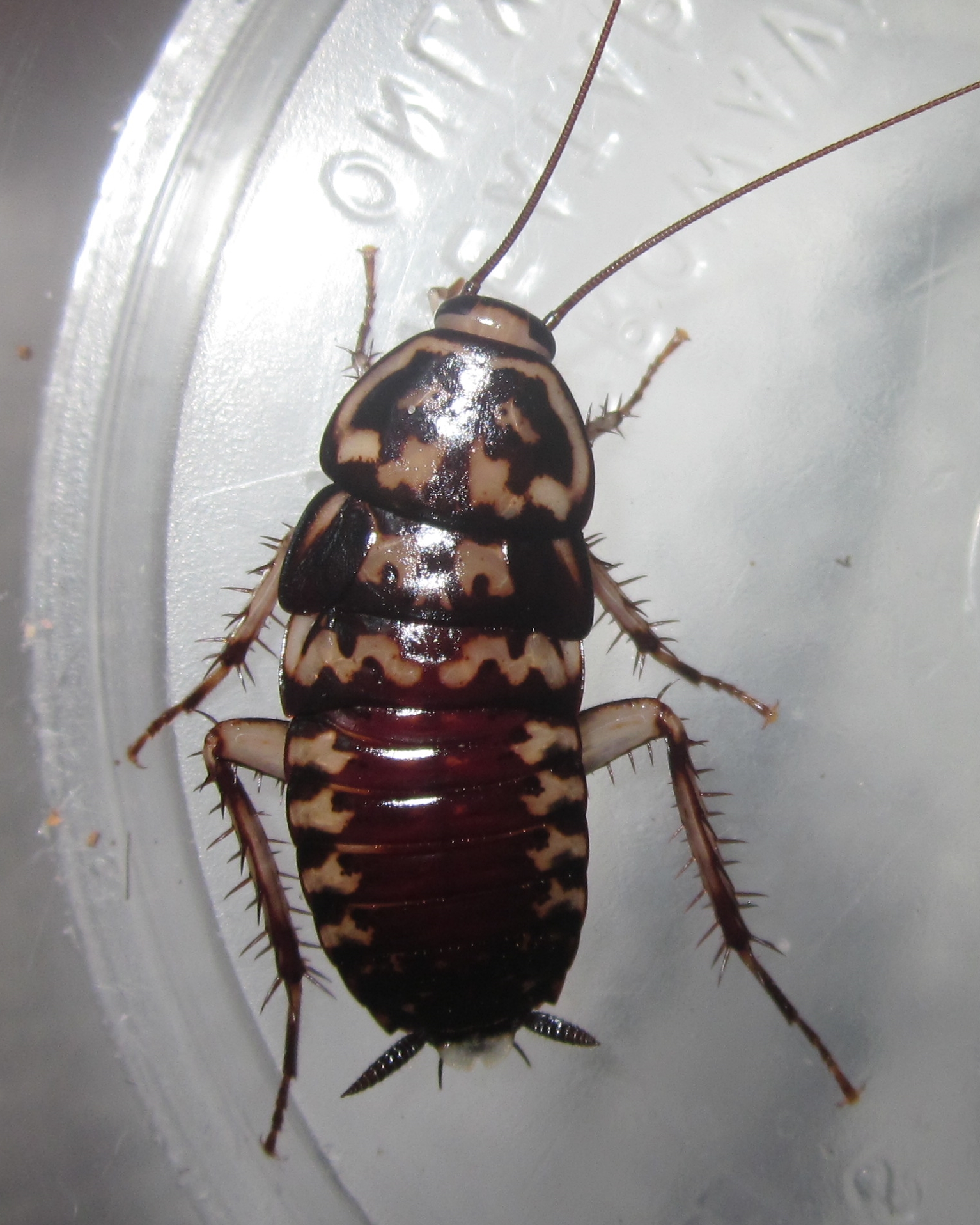
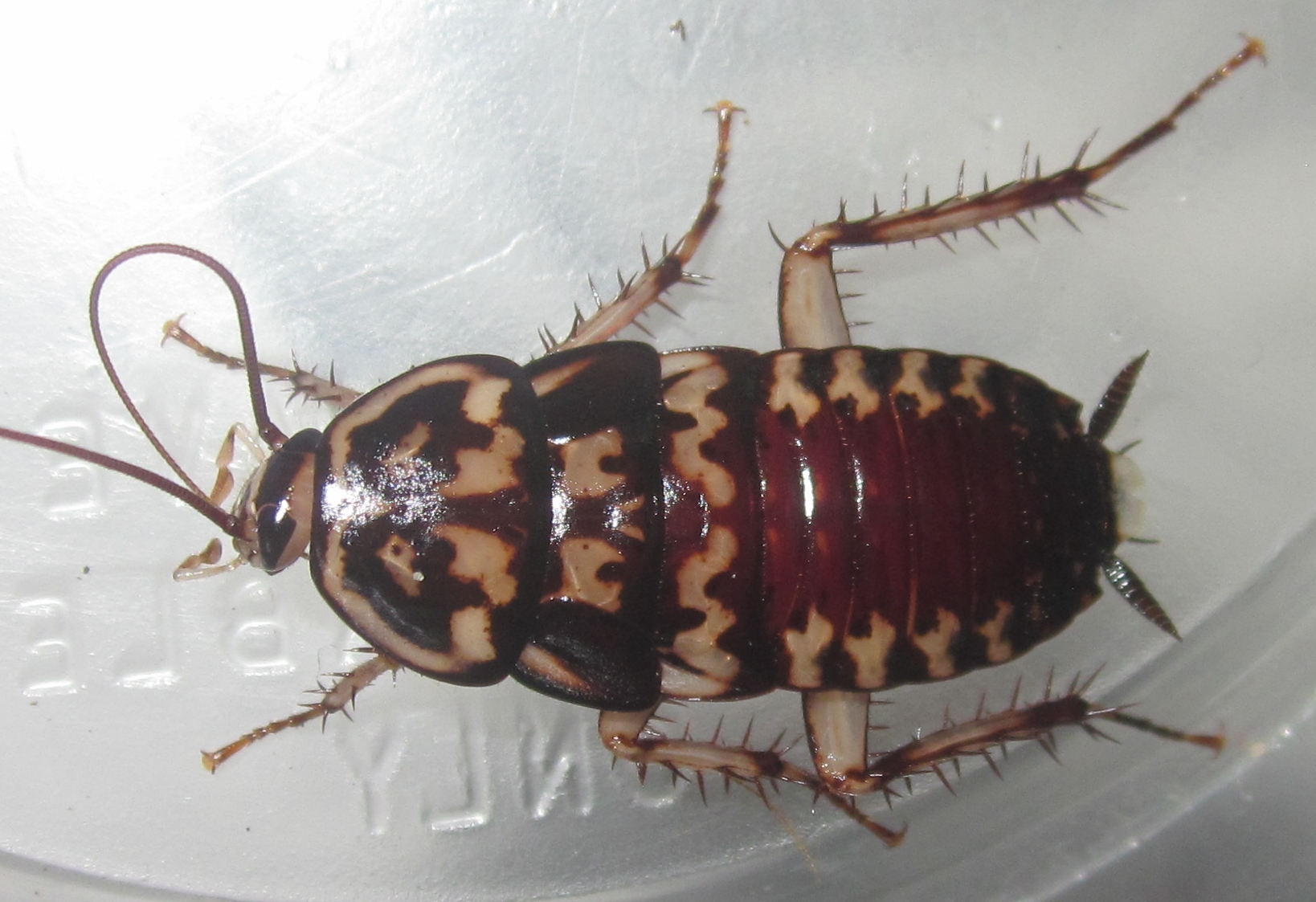
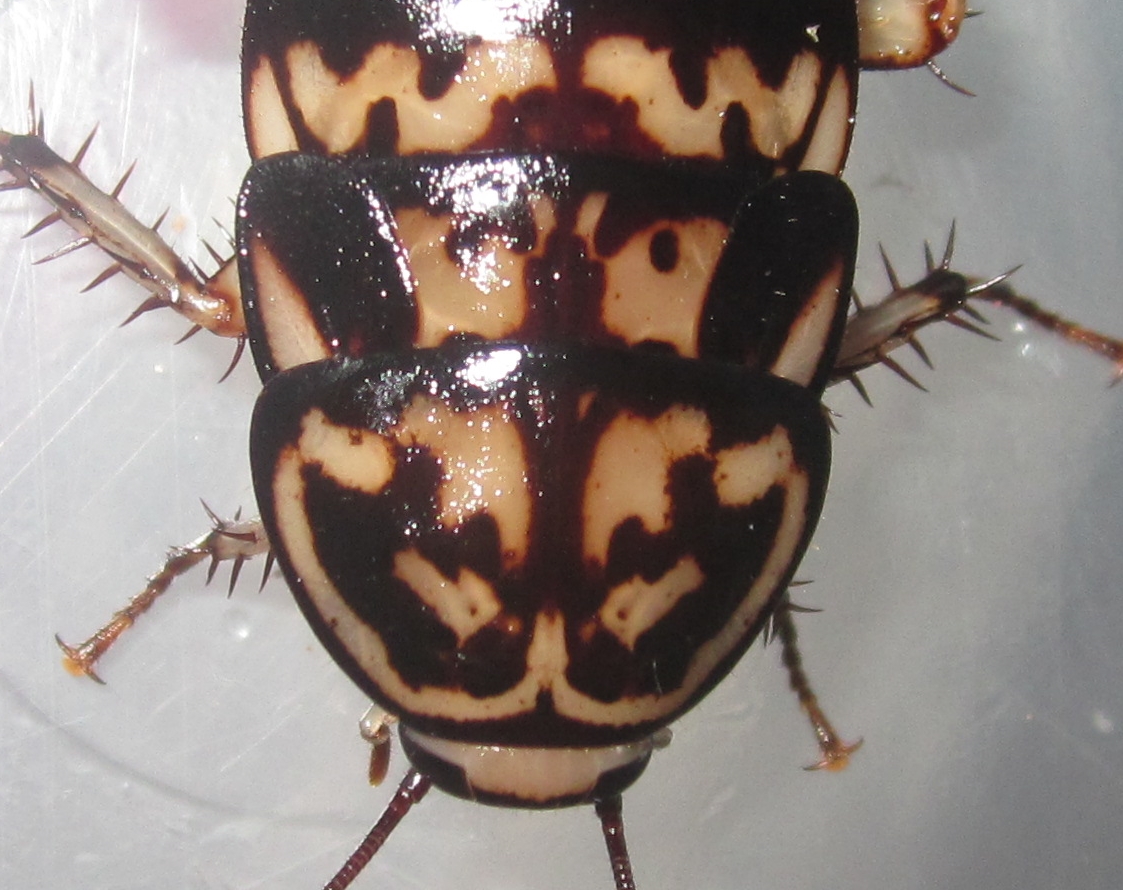
Got some neat updates to share to wrap up the month, so let's dive in! 😄 First off, my Neostylopyga rhombifolia have started maturing, and man are they pretty! 😍 The males have a reddish coloration to their abdomens, whereas the females are black, and both have ornate creamy "Harlequin" markings all over. A very pretty species, shame they aren't more commonly kept!

Here are some pictures of an adult pair:

Male


Female


Really hope this Chinese hobby strain will breed well for me, I'll keep y'all posted on them for sure!

Next up, an update on my Symploce morsei "Key Largo, FL"... I've got babies!!! 😁 It took the ooths quite a while to hatch, and I was starting to get worried, but now there's a steady stream of newly hatched nymphs coming in. So I've officially succeeded in breeding this species!

Here are a few pictures of the cuties:


Hopefully they'll continue to do well for me, will probably be able to offer them up for sale to fellow Ectobiid enthusiasts soon! 😄

In even more positive Ectobiid news, I've started getting Plectoptera poeyi babies already! And boy are there a lot, I should have NO issues starting a colony of these again. 😄

Now, this update has been a LONG time coming... I've finally produced my first CB Asbolus mexicanus mexicanus adult! 😁 And there should be more where this one came from, using clay in their substrate mix has really improved pupal cell stability, and I've got quite a few larvae sitting in pupal cells now. 🤞

Here are some pictures of my first adult:


Teneral darklings are so pretty IMO, love the burnt orange coloration on them. 🧡 Hopefully there will be many more adults where this one came from!

Lastly but not leastly, due to personal issues Chandra Orr is trimming her collection a bit, and has entrusted me with her last 9 Perisphaerus pygmaeus females, and a small nymph. I've still got around 15 females of my own, plus a brood of small/medium nymphs that were born in February. Chandra is unsure if all of her females were mated, but once one of my small male nymphs matures (probably in a couple months) they'll get fertilized for sure. 😄

It's been a rocky road for my colony for the past year, with VERY little reproduction going on. However, I now think I've just been keeping them too humid, and am currently trying to keep them drier like my P.punctatus (which are thriving). So far mine are looking good and quite a few of my females are gravid looking, so fingers crossed they start popping out broods soon... And this addition of 9 more females should really help in the long run as well! 🤞

Here are a few pics of some of the new females:


Fingers crossed my now buffed up colony starts breeding soon, this species can be quite prolific, but they need the conditions to be perfect. Big thanks to Chandra for sending me these gals, I'll try and do her proud! 😄

Well, that does it for this post, thanks for reading, hope you all enjoyed, stay safe, and I'll see everyone next time! 😉