Showing posts with label Asbolus verrucosus. Show all posts

Wednesday, February 8, 2023

January/February 2023's Fails

It's that time again, time to take a look back and see what losses my collection has suffered in the past couple months. 

Well, unfortunately my single male Eurycotis opaca "Jaruco" died, right after maturing. This was seemingly due to a Serratia bacteria infection, seems this batch of E.opaca came in infected with the stuff, and sadly my male happened to die as a result... 😢
Funnily enough, my sole female E.opaca "Soroa" also died due the same reason. However, there was a stray ooth in their shipping cup I had missed, which hatched about a month ago, so I have a decent amount of nymphs to work with it that strain thankfully.

However, this leaves me with a single adult male "Soroa", and an adult female "Jaruco"... I don't advocate for locality crosses, and their offspring will almost certainly look worse than either pure locality IMO, BUT I've always wondered what an intergrade between the two would look like. So, I guess I'll make that happen. 🤷‍♂️ I won't sell the offspring obviously, this is just to quell my own curiosity. Both these adults would die unmated anyways if I left them alone, so might as well see what happens when they cross (which could prove useful for identifying potential locality "hybrids" of this species, if those were to ever start flooding the market).

For whatever reason, my Cariblatta lutea seem to be failing. I got a strong and fast initial round of hatches not too long after getting these from Kyle, but the nymph survival rate has been abysmal thus far, and I've no idea why. 🤔 I still have a breedable number of nymphs, but not sure the population will actually grow much this generation, very odd, considering I feel my husbandry is on point for them.

Another Pseudophyllodromid that's taken a big L in my collection, Margattea cf. bisignata "Macao". Unfortunately I underestimated just how well my Perisphaerus punctatus were doing, and they outcompeted the Margattea in their enclosure before I realized what was going on. I have a single adult male, and a subadult female left... Whether this will be enough to save my culture, I'm not sure, but I'm not holding my breath... Though thankfully, at least two of the people I sent this species to here in the US have thriving colonies still, so I'm not too concerned with their state in the hobby. 😊

Now this is quite a bummer for me, but my Tafalisca eleuthera adults all died, one after the other, all prematurely, and seem to have barely reproduced in my care at all. I'm not sure why, because my husbandry parameters are pretty much the same as Kyle's, so they should have been fine, and indeed I raised them from nymphs with no problems.

I have found a total of four hatchlings so far, but I'm pretty sure that's gonna be it... It seems like my females didn't find my enclosure at all suitable for oviposition, depite them having bark, substrate, and cotton balls to potentially oviposit into (all of which are documented egg laying sites for them). Pretty disappointing outcome, considering how enamored with this species I am. 😢

My Ceuthophilus chiricahuae are also doing very poorly, and I'm not entirely sure why. The adults acted extremely territorially towards each other, and the false didn't lay a ton of eggs. A lot of the eggs they did lay simply rotted, and while the half dozen or so offspring that are remain are stable and growing well, I have less than I started with now... 😐 I do still have an adult female, but I've no idea if she's actually gravid, let alone mated. 
Anyways, I moved them to an enclosure with better ventilation, in a slightly warmer location, and will probably give them an actual humidity gradient rather than keeping the entire enclosure humid, just to see if that all helps the next generation do better.
So not a total loss for this species mind you, but awfully close.

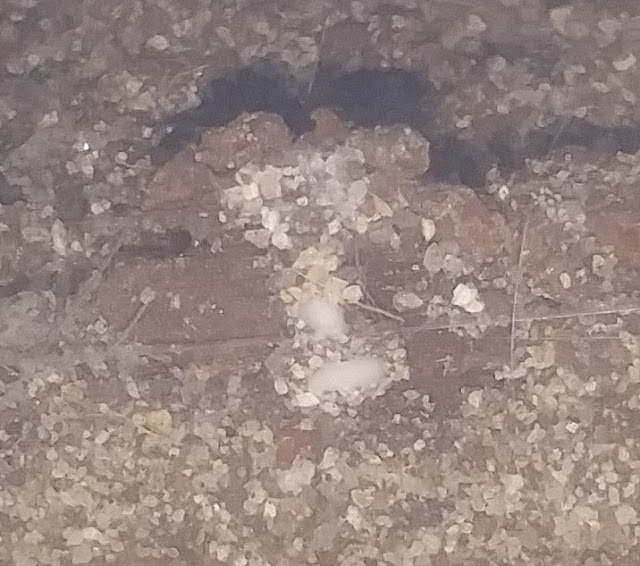
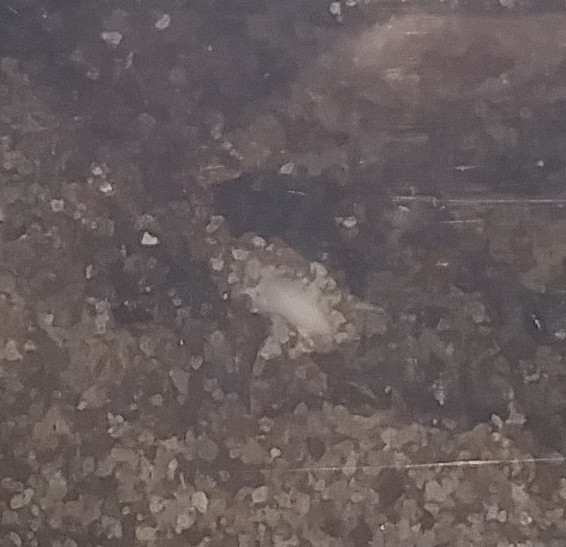
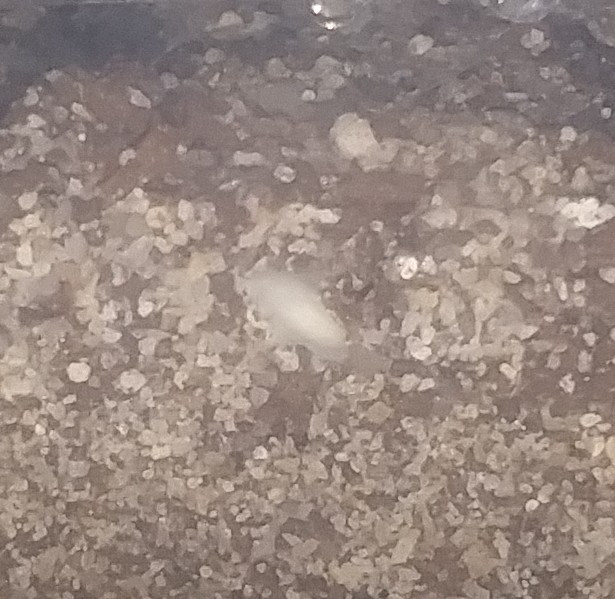
Well, I found out why the Asbolus verrucosus Joshua sent me weren't doing well well. They didn't have entomophagous fungus, rather they were infected with parasitic wasps. 🙃😂 Four of the six Joshua sent me unfortunately died and had wasp larvae emerge from them, which instantly burrowed into the substrate and formed silky cocoons.

I know I should probably rear some of these wasps up, take pictures, etc. for the sake of documentation... But f**k it, I don't wanna risk some of these SOBs escaping and parasitizing any of my other Cryptoglossini, or god forbid any of my other Tenebs (though parasitic wasps DO tend to be very host specific). These crappy phone pics of their cocoons before I destroyed them is the best I can do:


So yeah, apparently not allowed to keep BDFBs... 🙃😂 Though a friend of mine reached out and offered to send me more, an offer which I'll probably take them up on next month or so.

Well, that about sums up all my failures of 2023 I think. 😅 Not too bad so far I guess. Thanks for reading, see y'all next time!

Sunday, December 25, 2022

My New Blue Death Feigning Beetles!!!

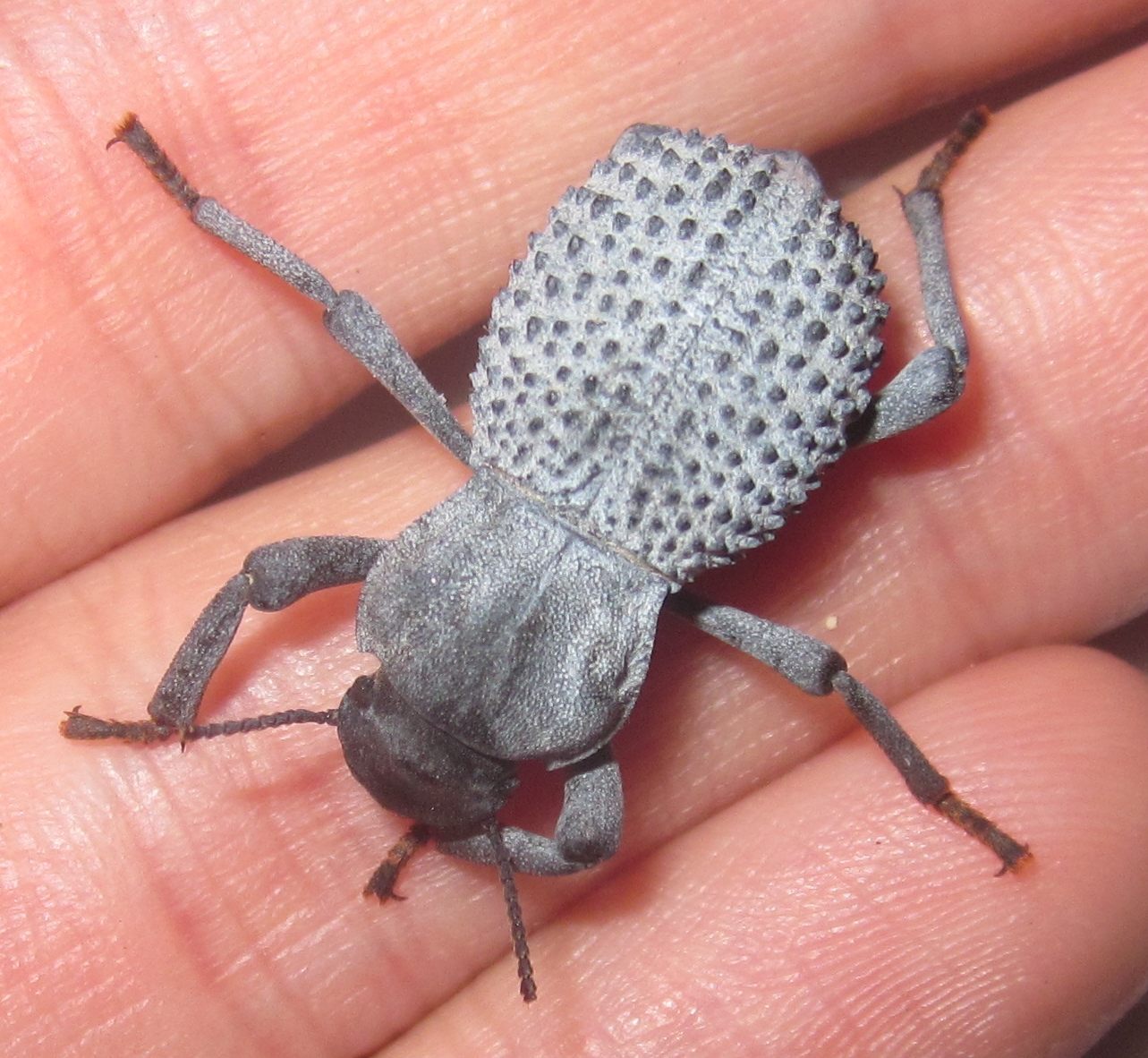
Merry Christmas and Happy Holidays everyone! 😁 Today I've got a new acquisition to show off, three pairs of Blue Death Feigning Beetles, Asbolus verrucosus from author of Bring On The Bugs Joshua Campos! 😄 These are one of the most iconic US native darklings in existence, very popular in the hobby, and yet I've literally never seen them in person or kept them before. 😂 I gotta say, I like them a lot, their glaucous coating is a very light blue, and I love their bumpy elytra.

Now, Joshua is currently going through the process of getting rid of every last possible trace of entomophagous Trichoderma infested inverts from his collection, and apparently these Asbolus were the last two go. He's not POSITIVE they're infected, they just might be, and apparently haven't been breeding for him (lack of reproduction can be a symptom of Trichoderma infection). But rather than kill them outright, he sent them to me to see if I can possibly cure them and get them breeding, in exchange for larvae if I do succeed. 😊

Luckily, curing Trichoderma infections isn't all that complicated, however most inverts simply can't handle the process, as it involves being kept well ventilated and completely bone dry, with only fruits for food/moisture for 2-3 weeks. Trichoderma is a protein hungry mold, so no protein rich food sources should be offered for a couple weeks during this time. Now, most roaches and many more fragile/frail darkling species wouldn't be able to handle this, even as adults. But BDFBs are made for these kinds of conditions, so I am confident they'll survive this treatment (which they are currently undergoing BTW), and that after it's done they'll be fungus free. Hopefully once I actually get them moved into a proper container with substrate, I'll get some eggs and larvae from them. 😀

Anyways, here are some pictures of a few of the adults:


Big thanks to Joshua for entrusting me with these iconic darklings, I'll do my best to ensure they're cured of any possible Trichoderma infections they may have, and hope to produce lots of larvae from them in the near future!

Well, that does it for this post, thanks for reading, hope everyone enjoyed and is having a great holiday season! Stay safe, and I'll see y'all next time! 😉

Friday, November 24, 2017

Drymaplaneta semivitta Hatchlings & a Asbolus verrucosus Update!

It's finally happened, one of my Drymaplaneta semivitta oothecae hatched! 😁 So happy that I finally have offspring of this species, hopefully many more will follow! Funnily enough, this particular ootheca had a small spot of mold growing along the opening seam a week ago, which I quickly wiped off, but I figured the mold was coming from inside of the ooth, which would have meant it was a dud. I decided to leave it be just in case, and I'm sure glad I did!

I was able to get a few pictures of the nymphs squeezing their way out of the ootheca, but was interrupted and had to leave before capturing the whole process. Here are the pictures I could get:


And here is one of them a couple days after hatching:


I am thrilled that I could successfully breed this species, things were looking bad for my colony for a while, but it looks like everything worked out in the end! 😊

On the other hand, my three Asbolus verrucosus larvae apparently haven't been doing well in my care at all, I only have one left! 😞 Either their cage was too small and they resorted to cannibalism, I over-watered them (more likely IMO), or they don't like the food I have them. There's no hope for a future generation, that's for sure, I'd be surprised if I can get this last larvae to make it to adulthood! I'll definitely try my hardest though, I'm gonna keep the sand less moist, and may upgrade the larva's enclosure size soon too. 

Anyway, here are some pictures I took of the remaining larva:


At this age, it looks very similar to an Eleodes spp. larva. At a glance they look the same, the only noticeable difference being the unusual terminal segment, (which looks more odd in person). Hopefully I can get this last larva to mature, I will keep you all updated!

Anyway, that's gonna do it for this post, I hope everyone enjoyed, will see you all next time! 😉

Monday, August 14, 2017

New Tenebrionid larvae!

Today I received a package from Brandon Woo, (AKA Metrioptera on Bugguide), which contained larvae from several Tenebrionid species he is keeping. He wanted to focus on the rearing of other insects instead of working on rearing these, so he was kind enough to send them my way. 😊

First off, he sent me a few Asbolus verrucosus larvae, I counted three so far, but apparently he sent four or five, so I'll check their shipping enclosure again, just in case! This species is very commonly kept in the hobby, and is known as the "Blue Death Feigning Beetle". They are also notoriously difficult to breed in captivity, and Brandon wasn't even expecting his to lay eggs!

Hopefully I can rear these larvae to adulthood, the most difficult part of keeping this species seems to be inducing pupation, many mature larvae that are isolated for pupation just die instead of pupating. One keeper has been successful by putting mature larvae in deli cups with moist compressed substrate inside an incubator set in the high 80s, I may try a different approach though, we'll see when the time comes I suppose!

I have mine housed in a small container with a substrate that is mostly sand, with a tiny bit of coconut fiber mixed in, and some dead leaf litter on top. I will be keeping the substrate fairly moist, from what I've heard these larvae don't like it as dry as other Tenebs. In addition to the leaf litter, they will be fed chick feed. No pictures, sorry, the larvae are pretty small right now, will try to get some pics of them as they get larger!

Brandon also sent me two groups of over a dozen Eleodes larvae, one group comes from an enclosure that he kept Eleodes acuticaudus and Eleodes osculans in, the other group comes from an enclosure he kept E.acuticadus and E.grandicollis in. So I really don't know what they'll all end up growing into!

I am keeping the E.actuticaudus/osculans larvae in an enclosure with coconut fiber and dead leaves as the substrate, which I will be keeping moist on one side and dry on the other. The E.acuticaudus/grandicollis larvae are in an enclosure with a substrate of sand and coconut fiber, along with some dead leaf litter, I will also be keeping their enclosure dry on one side and moist on the other. Both groups will be fed chick feed.

I didn't bother taking pictures, because they look basically identical to other Eleodes larvae I've kept like E.hispilabris, so no need really. If, once they get bigger, they obtain features that are different or unique from other larvae I've seen, then I will snap some pictures of them for sure! 🙂

I am quite excited to see what they grow into! I'm personally really hoping to get at least a few E.osculans or E.grandicollis, but who knows, they may all end up being E.acuticaudus! 😄 Will be sure to update you all on their progress!

Well, that's going to do it for today's post, I hope everyone enjoyed, these will likely be the last new invertebrates I acquire for a while, as I will be in the process of moving very soon! Anyway, I will see you all next time! 😉