Showing posts with label Trachelipus rathkii. Show all posts

Tuesday, August 16, 2022

"Masoala" portentosa Babies, Ammopelmatus Update, & Random Pictures!

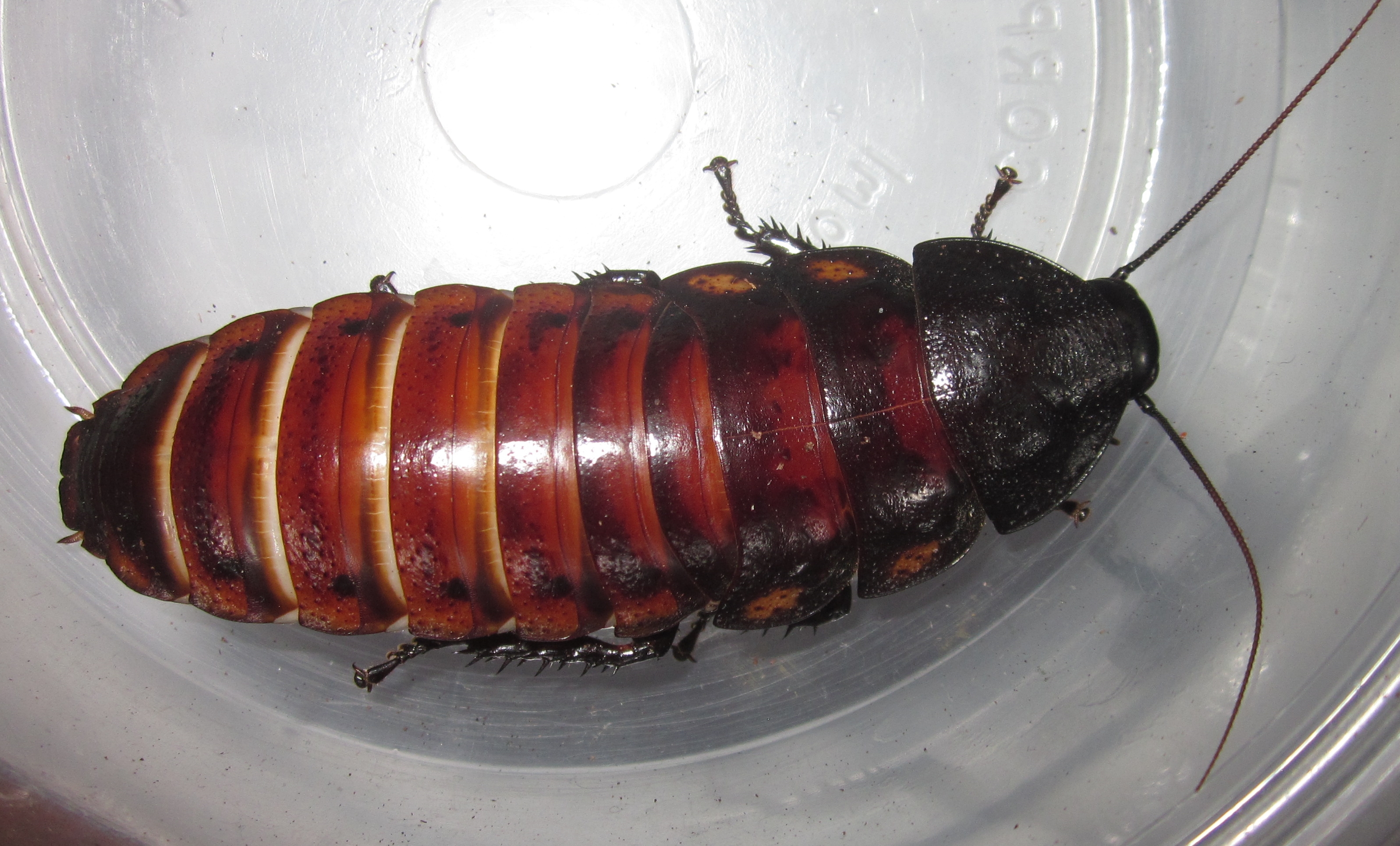
Well I forgot to mention this in an earlier post, but two weeks ago, one of my Gromphadorhina portentosa "Masoala" gave birth! 😁 Oddly though I think it was a brood from my one sickly female, as I found her dead the same day. I'm pretty sure she actually aborted most of her ooth a few weeks prior and was acting a bit off from there on out. Thankfully she apparently still had brood in her, gave birth to about 15 of them, and then died. But the rest of my females are all healthy, and most are SUPER plump, so I'm expecting a lot more big broods soon (without the random post-birth mortality... 😅). And the offspring that were born are all healthy, and most have molted once or twice already.

Here are some pictures of the nymphs, plus one of the other adult females (showing off more "normal" coloration for this strain, compared to the "cherry red" female I showed off in my last post about this species:

Small nymphs


Adult female


So glad these have bred for me already, and hopefully there's a LOT more nymphs where these came from! 🤞

Next up, some unfortunate Ammopelmatus sp. "Boise, ID" news. It would seem that heating my females to get them to catch up to my males in growth was a very bad idea, apparently heat, even coupled with high ventilation, causes a lot of issues with them, and all but one of my females died before maturing, with the last female not looking so good either. I've moved her back to a cooler location alongside my adult males, but I'm skeptical that she will make it. Poor decision on my part, but if I had just left them at room temperature they wouldn't have caught up to my males anyways... So seems like I may have been doomed to fail with the ratio of nymphs I found.

This is all particularly unfortunate, considering that now that all my males have matured, I now know that adult males of this species look pretty dang cool! They have long gangly legs, and VERY long spines on their hind tibiae that I've not noticed on other Ammopelmatus spp. males I've kept.

Here are some pictures of one of the mature males:


Hopefully my last female pulls through and matures in time to mate with one of my males, but I'm not holding my breath. At least I got to see adult males in person.

My Alphitobius diaperinus are doing great, and I just added them to my For Sale list, but realized that despite having kept them previously years ago, I've never gotten decent pictures of them... So, for the completionist in me, and for my FS list, finally got around to getting some pictures of a group of adults. 😂

Here are the pics:


About time haha, still no pictures of the larvae, but meh, good enough. 😅

Lastly, my Trachelipus rathkii "Ada County, ID" are also doing great, but again I've never gotten pictures of just normal grey rathkii... and I just added these to my FS list. So once again, for the sake of getting pictures of all the stuff I keep, and for my FS list, I took some pictures of then. 😆

Here they are, in all their glory:


I like the variation this species displays, they're a simple but interesting isopod IMO. Very intolerant of drying out though, and I only find them in very moist areas in the wild.

Well, that does it for this post, thanks for reading, hope everyone enjoyed, stay safe, and I'll see you all next time! 😉

Saturday, December 24, 2016

Some More Roach & Isopod Updates

My Arenivaga cf. genitalis pair has been doing very well, and I suspect my male may mature soon!

I took some pictures of them today, here they are:


I can't wait until my male matures, I really want to breed this species successfully!

Unfortunately my Arenivaga tonkawa are not doing well at all, one of my two remaining females died last week, she was covered in mold, so I am beginning to wonder if the reason my two males died was due to an entomophagus fungus, they are housed in the same enclosure that I had my old Cariblatta lutea in, which all succumbed to an entomophagous mold. In any case, once I get some new A.tonkawa I will definitely be housing them in a different enclosure, and once my last female dies I will throw her cage out.

My Balta notulata are going through a little bit of a rough patch, a couple weeks ago I noticed two of my nymphs had died and the remaining nymphs and adults had all their tibia bitten off for some reason, and were all starving since they couldn't climb into the food bowl.

I took them out of their enclosure, sterilized their substrate and decor and then put them back in, however the substrate and decor became overgrown with white fuzzy mold which made it hard for the roaches to move around, so a couple more nymphs died. I moved them to a smaller enclosure, and they seemed to be doing well, however a different type of mold started to grow in their enclosure, one that turns the substrate and decor into one solid mass, so I had to rehouse them, yet again!

I now have them in an enclosure with about half an inch of coconut fiber and sand at the bottom, (sand to retard fungal growth), with some bark pieces and dead leaves as hides. There are two adult females, both with chewed off tibia, and three nymphs, two of which had their tibia chewed off but they have since molted and regrown them. They have all been doing much better, and hopefully some of the nymphs will turn out to be males so they can mate with my females and I can finally breed this species.

I finally got some pictures of my Trachelipus rathkii, which I caught a few months ago, most of them are orange ones. I found some babies in the enclosure last week, so it looks like this species is doing well for me!

Here are those pictures:


I also got some pictures of my Porcellionides pruinosus too, they are doing good for me, ironically not so much so in their designated enclosure, but very much so in my Parcoblatta virginica enclosure.

Anyway, here they are:


The Dalmatian Oniscus asellus have been doing great, they had some more mancae recently, which also look like they carry the Dalmatian trait, and the adults are getting quite large!

Here are some pictures I took of them today:


Overall it seems like all my isopods are doing well, which is always good to see.

Anyways, that's gonna do it for today, I hope you guys all enjoyed this post, happy holidays everyone! :)