Friday, May 27, 2022

Identifying Two Bylas Beetles!

Roachcrossing April Package Series Pt. 3/5
««« Previous post in series • Next post in series »»»

On Kyle's AZ trip last year, he found some beetles in a compost pile in a place called Bylas. He was only really trying to collect the Cotinis in the pile, but he grabbed some of the compost along with them, and some other beetles snuck into his culture and proliferated in there rather quickly! He wasn't quite sure what they both were, so he sent some to me to try and ID them better. 😄

First off, we'll start with the more abundant of the two, a Blapstinus species I'll be referring to as sp. "Bylas, AZ". Looks like any other ol' Blapstinus, though I will say they seem a bit larger and chunkier than the sp. "Kuna, ID" I have. Unfortunately since the genus is badly in need of a new key and revision, a genus identification is as good as it gets for most Blapstinus.

I've got them housed in a small but well ventilated deli cup with a bit of old, used coco fiber as the substrate (I think some old Lucihormetica substrate), and a little crushed leaf litter mixed in. I'm keeping a third of the substrate humid, the rest dry, and have them at room temps. I'm feeding them dog food and the leaf litter for now.

Here are some pics of one of the adults:


Hopefully they'll breed soon, I've not seen any larvae yet, might have to mix in some sand into their substrate to really get them kicking off.

EDIT: Well I wrote this post several days ago and scheduled it to come out today. However, literally a few hours after the post released today, I found larvae in their setup. 😂 Said larvae are already half grown so they're just really good at hiding I guess! So yeah, successfully bred these, woot! 😄

Next up, Kyle sent a single adult of what he had described as a tiny, orange beetle species that he just couldn't get a good picture of. They'd been breeding well in the Summer/Fall but their numbers dwindled down quite a bit recently, and so he was only able to send the one adult for identification. I didn't even see it initially when I unpacked them, as he'd put it in with the Blapstinus. However eventually it popped up in the new Blapstinus setup, and I was able to identify it as an "Ant-like Flower Beetle", specifically Vacusus vicinus.

Not many have bred ant-like flower beetles, but their larvae are known for feeding on decaying organic matter, and adults of some species visit flowers, while others also feed on decaying organic matte. So it seems to be a simple enough task, and their lack of a presence in the hobby is likely just due to their diminutive size.
I've got mine housed with the Blapstinus, probably won't be breeding these but perhaps I'll get lucky and it's a gravid female. 😂

Here are some not completely trash pictures of my adult, I can see why Kyle has trouble snapping pics of them... Not only are they tiny (3-4mm), but they will NOT stay still! 🤣


So, mystery solved for both these tiny beetles, and at least one of them should make for a neat new long-term addition to my collection! 😁

That's gonna do it for this post, thanks for reading, hope everyone enjoyed, stay safe, and I'll see you all next time! 😉

Wednesday, May 25, 2022

Gromphadorhina, Eurycotis, Eupolyphaga & Eleodes Updates!

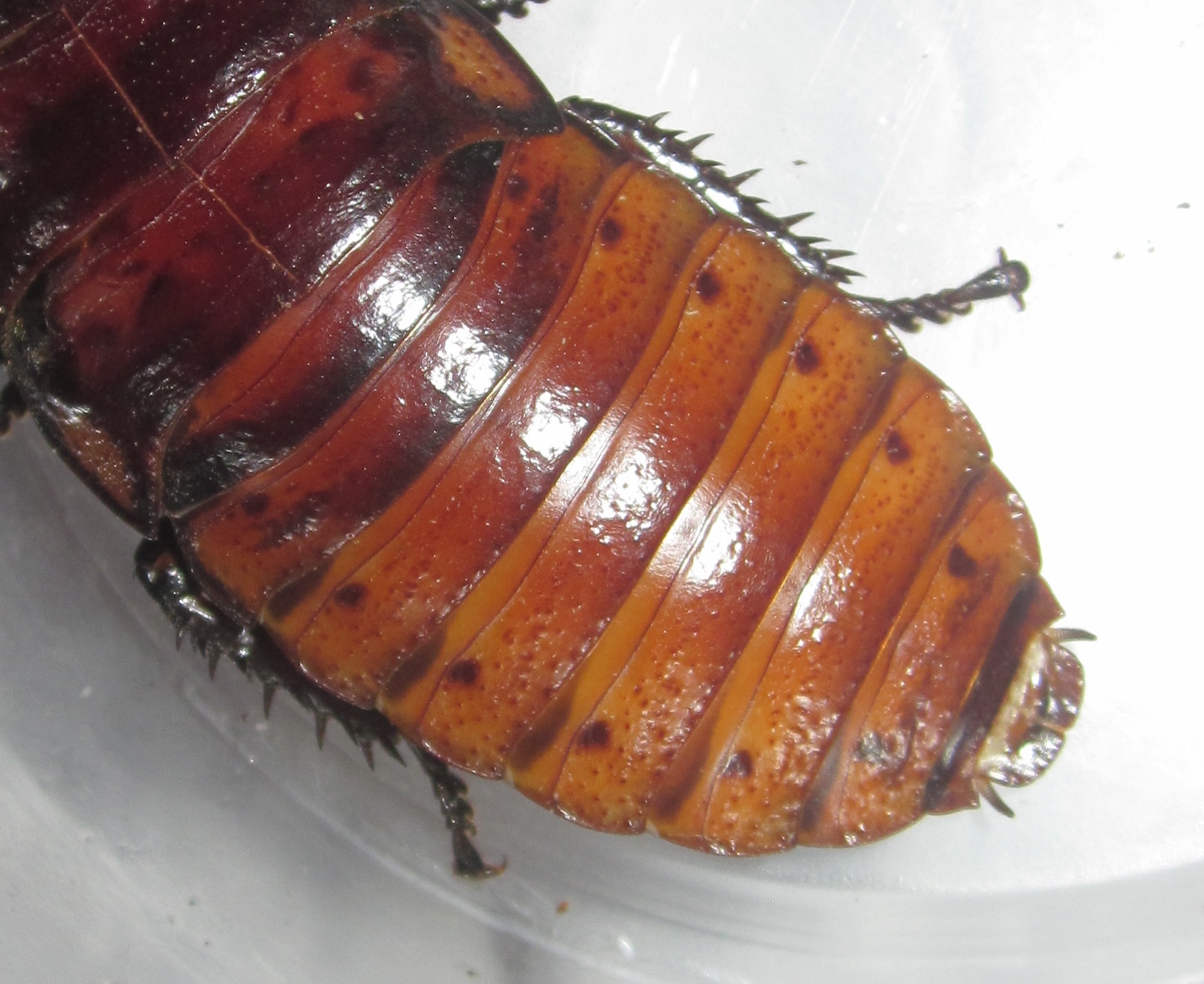
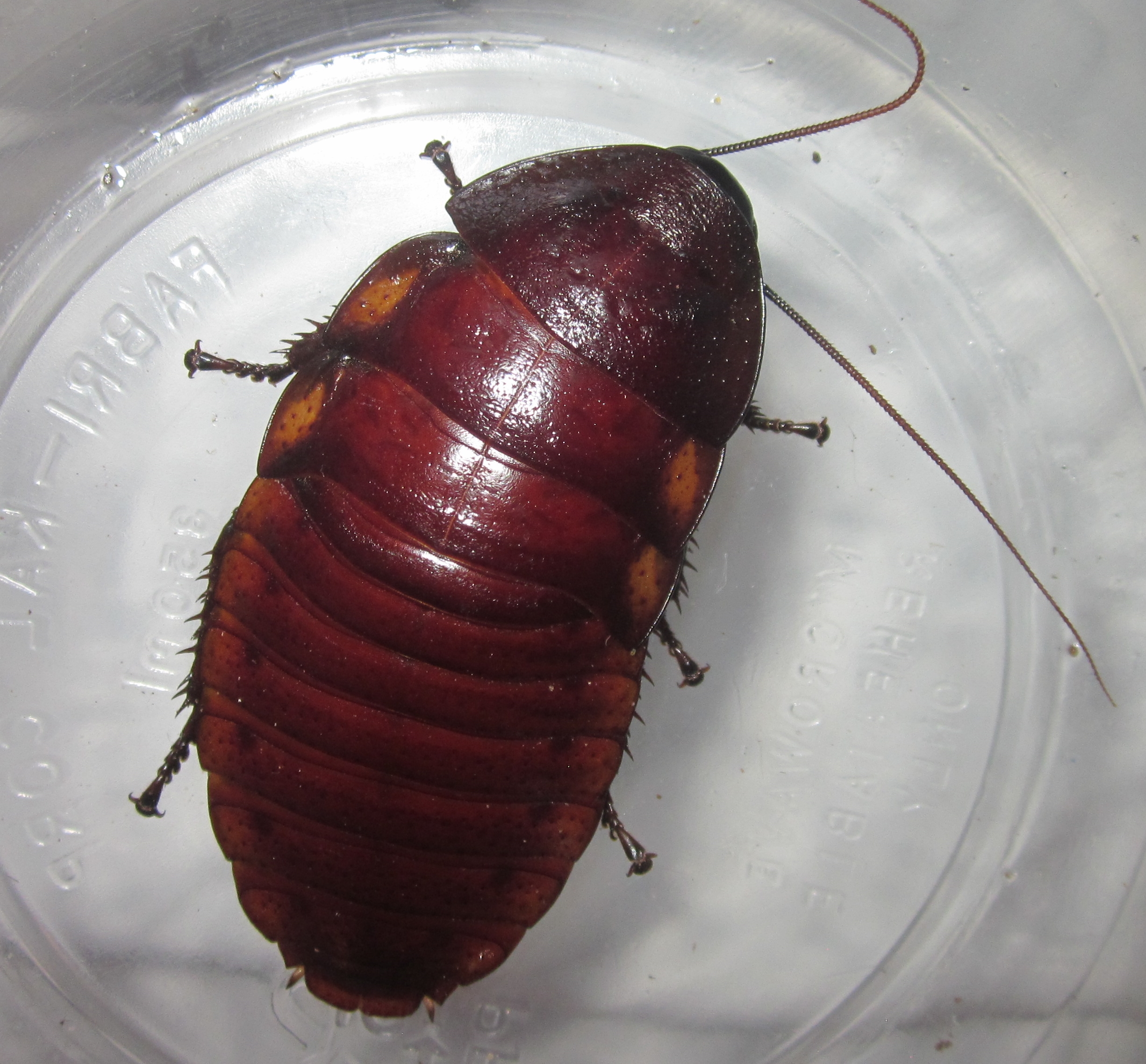
It seems all my Gromphadorhina portentosa "Masoala" are now mature, and man are they pretty! 😁 I sadly was too lazy to get pictures of large nymphs, but they are very pale and a mixture of neat reds and oranges that you don't typically see on old US stock portentosa strains. A drastic change from the very dark coloration the younger nymphs have.

Most of the adults are pretty large despite being reared in a rather small enclosure, the males are easily the largest portentosa males I've seen in person (even the hybrids I kept in the past didn't get this large). Most of the adults have got a really rich orange coloration to their abdomens, with some black markings here and there. A couple are lighter orange, but the most impressive by far are a couple of my females that are a stunning cherry red color. Even their pronotums are red, and it's not teneral coloration at all. 😍 This might be a trait I try to isolate as it's own strain in the future, for now I'll keep them all together though and let the first generation produced by me have as much of it's natural color variation as possible.

Here are some pictures of a couple males and one of the cherry red females:

Adult male #1


Adult male #2


Adult female


SUCH a nice strain, it's amazing that we've got another pure strain of portentosa in the US hobby, with locality data nonetheless! 😁 Kyle at Roachcrossing is also working with another old stock of portentosa originally maintained by UCR that seems to be pure as well (and more variable in coloration than the old "Cleveland Aquarium" stock). So we're really gaining new pure hisser strains with speed this year! 😄 Hopefully they keep on coming, can never have enough hissers in culture IMO!

Now, no pics for either of these updates (because I've been super busy lol), but I've gotten hatchlings from both my Eurycotis sp. "Venezuela" my & Eupolyphaga sinensis "White Eye" cultures! 😃 Both have been a breeze to culture so far, I was expecting the Eurycotis especially to be rather finicky, but they've not given me any trouble at all, with most of my adults still being alive and well, and making more ooths! 😂 The Eupolyphaga are also doing well, and I think some of the small nymphs I got in the original group are subadult males already! So I'll try and get pics of those when they mature for sure!

Lastly, it appears I made an oopsie with a couple of the TX Eleodes spp. that I got last year... 😅 

So, I had my Eleodes hispilabris "South TX Race" and Eleodes obscura glabriuscula housed in separate containers originally. However, I had my hispilabris in a rather cramped container, and the numerous males were stressing the females out with constant mating attempts. So I threw some of those males in my E.obscura setup since the two can't hybridize. Now, for some reason, I wasn't getting any offspring from my E.obscura, and then all of a sudden I started getting larvae after I put the hispilabris in with them... 🤔 Well, turns out one of those "male" hispilabris was really just a rather skinny female I sexed incorrectly, and the larvae I looked at had plain orange heads (compared to the red heads of obscura larvae). So I chalked it all up to the obscura having been collected too late in the Summer to still lay eggs that year (and indeed several of the adults died mere months later), and eventually housed the rest of my hispilabris in that same setup, thinking it was completely dominated by them now anyways. This was also the same setup that had a stray Alaus lusciosus grub find it's way inside that absolutely gorged itself on Eleodes larvae, so that whole setup was a mess lol. 🤣

Afterwards, I moved my obscura from setup to setup, basically just waiting until winter came so I could give my remaining pair a diapause and then hopefully get them laying again next year. That's what I did, and I moved them to their own new setup a few months ago, and am expecting them to breed by early Summer. 

Unexpectedly though, I didn't get very many of my E.hispilabris larvae to survive to a mature size, and most of the ones I tried pupating died off in their pupal cells, which is unusual since hispilabris is normally a rather easy species to rear. Finally one of the larger larvae not only pupated, but survived and eclosed successfully last week... But much to my surprise, was NOT hispilabris:


Yup, that's a female Eleodes obscura glabriuscula. 😂 So APPARENTLY I DID get larvae from them earlier last year, probably at the same time I started getting hispilabris larvae, but somehow didn't notice since the few larvae I checked definitely were hispilabris (and indeed I've reared a couple true hispilabris up to adulthood from that same batch of larvae). This explains the low larval survival rate in the breeding bin though, since the larvae of different Eleodes spp. will eat each other readily (they don't like competing for resources with other species). And it also explains the poor survival rates of the larvae I've tried pupating, since obscura are notoriously difficult to pupate and are finicky about humidity levels. 

So, on the plus side, for the first time ever I both successfully bred and reared up an adult Eleodes obscura! 😁 However, if I actually knew I HAD obscura larvae, I'd have put more effort and care into rearing and pupating then and probably would have had much better results... I also probably fed several of them off to random things too thinking they were just hispilabris, so, pain... 🙃 But, now I've got a WC female, a CB female, and a WC male, so hopefully the male mates with both the females and I get lots of larvae from them in their new setup this Summer. Plus, I've got a couple large larvae I'm still trying to pupate which I think are actually obscura, so here's hoping I can rear up a couple more adults! 🤞

Also, as a last update, the WC hispilabris (and couple CB adults) have started producing larvae in their setup again, this time they're the ONLY beetle species in that bin, so I should get much more offspring and have much better survival rates from them (and maybe actually rear up more than a couple adults). 😄

Well, that does it for this post, thanks for reading, hope everyone enjoyed, stay safe, and I'll see you all next time! 😉

Sunday, May 22, 2022

Two Alabama Beetles

Roachcrossing April Package Series Pt. 2/5
««« Previous post in series • Next post in series »»»

So, Kyle went on a trip to Alabama last month before he sent me this package, and he collected a couple beetles there that he thought I might like. 😄 Unfortunately, just one of each species, and I'm starting to doubt either are females, since I've not gotten larvae from either yet. I'll still be holding out hope for another month or so though!

First off, let's show off the more unusual of the two, Temnoscheila cf. acuta, a metallic species of so-called "Bark Gnawing Beetle" (family Trogossitidae). I've been wanting to try my hand at breeding these for years, and have found dead adults here in Idaho, never had any luck finding live specimens, either in the wild or available online. These beetles are predatory and typically live under bark, where they feed on other beetle larvae are various soft bodied inverts under bark.

I've been keeping mine in a well ventilated deli cup with a rotten wood substrate, with vertical bark pieces slanted against each other for hides. I'm keeping it at room temperature, humid, and am feeding it prekilled inverts and fruits (it only seems to eat the former). So far no larvae have popped up, so I kinda doubt mine is female.

Here are some pictures of the beauty:


Such an amazing genus of beetles, they may not be especially large, but they're super pretty, and given the ease of care of the adults, they're super underrated in the hobby IMO! At the very least, if I can't breed this species from this one individual, it's good practice for when I inevitably get a larger breeding group one of these days. 😁

Next up, Kyle also found an adult of a very attractive click beetle species, Ampedus rubricollis, from Tuskegee AL. I've bred Ampedus species previously, and that was prior to me really knowing what I was doing... so I've REALLY been wanting to try my hand at a pretty species in that genus again. Unfortunately, again after a month of good husbandry, I've not gotten any larvae yet, so starting to doubt this one's a female too... But at least it's good eye candy. 😂

I've got it in a moderately ventilated deli cup with a thin layer of crushed rotten wood as the substrate, and bark pieces for hides. I'm keeping it at room temps, quite humid, and am feeding it fruit. Still looks quite healthy, and I'm still holding out hope that the eggs of this species just take a while to hatch and that I've got a gravid female... 😅

Here are some photos of the cutie:


Again, not the largest of beetles, but it's still a respectable size for Ampedus, and a stunning species in terms of color! If I can't breed them this go around, hopefully I'll be able to find plenty more when I move to North Carolina... 😁😜

Anyways, that's gonna do it for this post, thanks for reading, stay safe, hope you all enjoyed, and I'll see everyone next time! 😉